WERKWORK
Maria de Buenos Aires
Maria de Buenos Aires
María de Buenos Aires
Tango-Operita von Astor Piazzolla, Text von Horacio Ferrer
mit Texten von Italo Calvino in einer Fassung von Martina Veh
In spanischer Sprache mit deutschen Übertiteln,
Ein einzigartiges Gesamtkunstwerk aus Oper, Lyrik und Tanz – Hommage an Buenos Aires und den Tango, an das menschliche Dasein und städtische Lebensformen
Kaiserslautern, 13. April 2024 - Das Pfalztheater in Kaiserslautern präsentiert mit "Maria de Buenos Aires" ein interdisziplinäres Meiserwerk, eine atemberaubende Inszenierung, die nicht nur durch ihre musikalische Brillanz besticht, sondern auch Musik, Schauspielkunst, Gesang, Tanz, Artistik und innovatives Videodesign unter atemberaubender Verwendung von künstlicher Intelligenz (WE ARE VIDEO aus München) vereint.
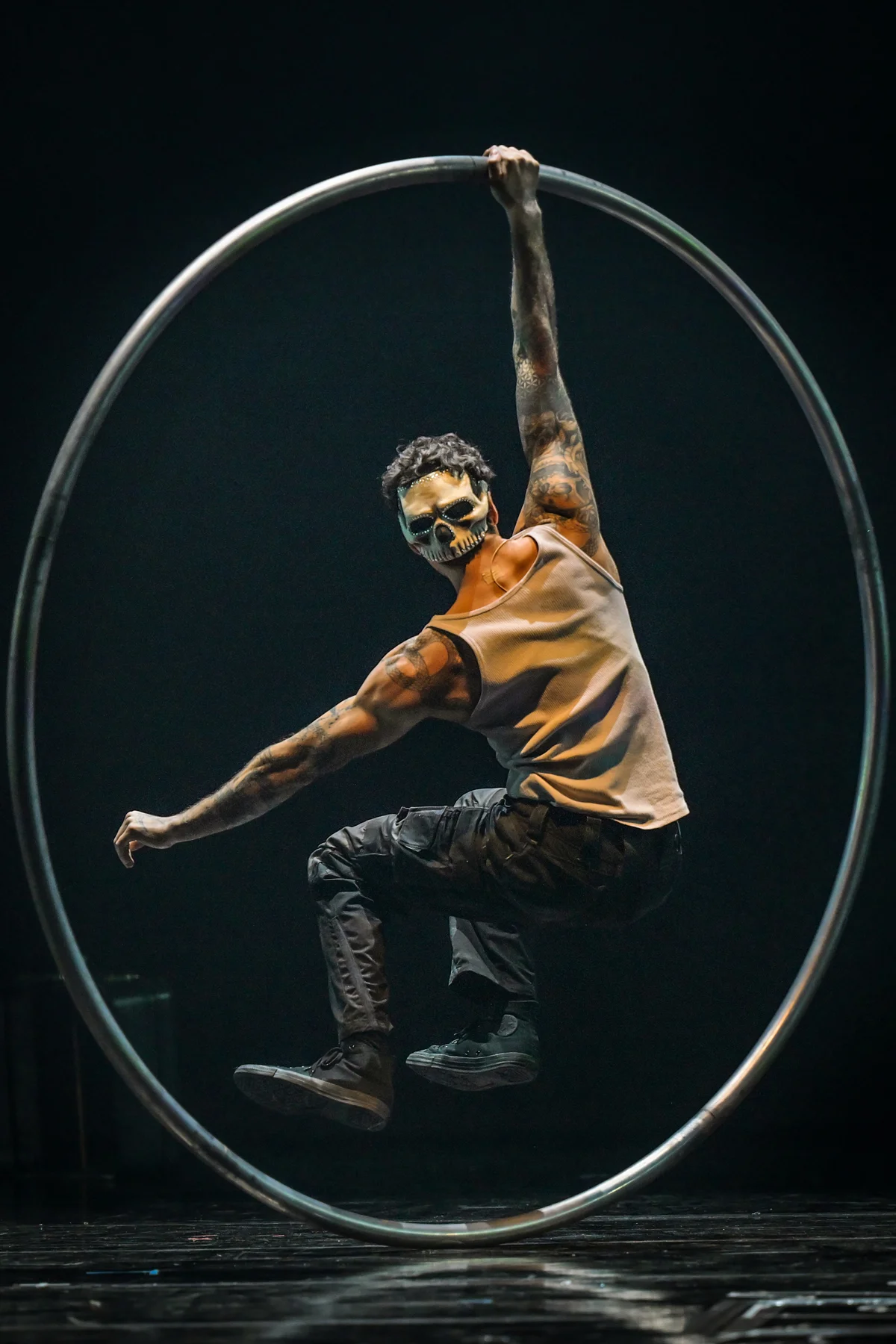
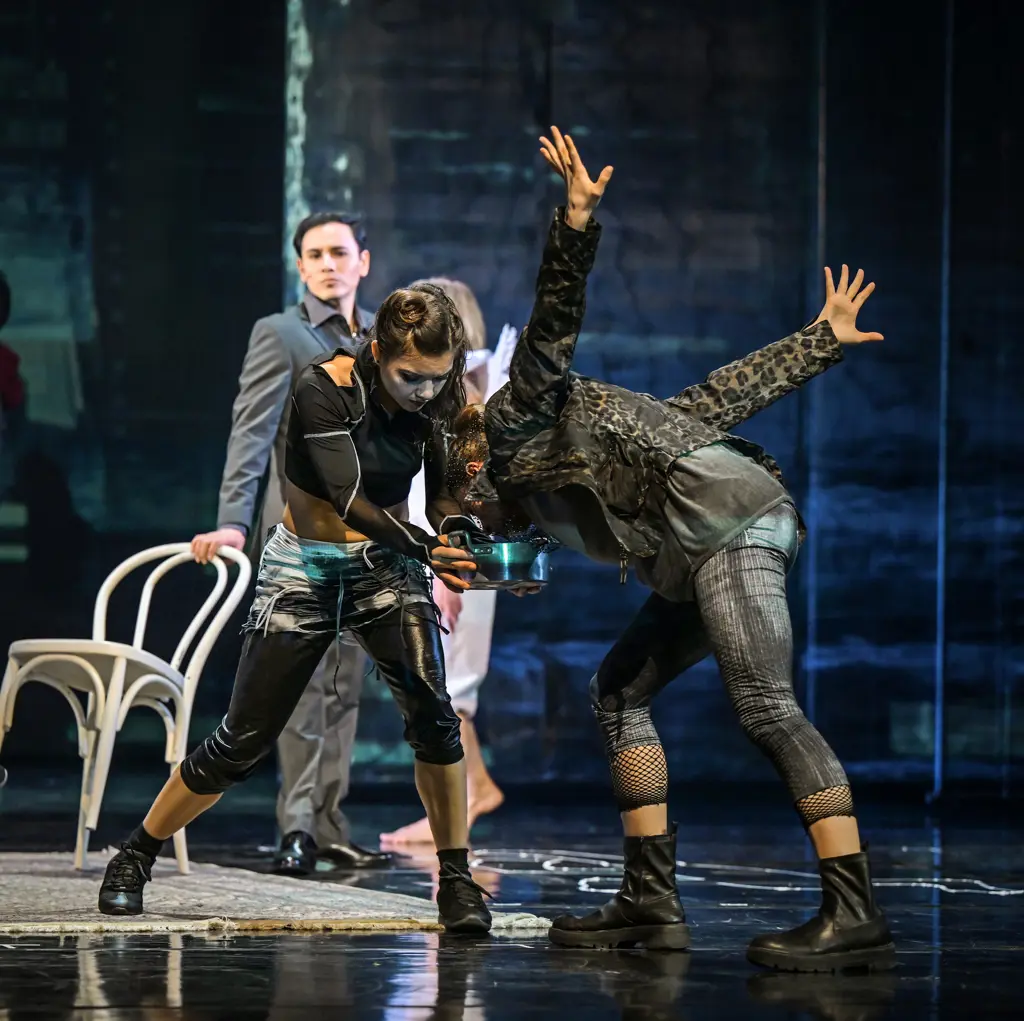
Unter der einfühlsamen, klugen Regie von Martina Veh entfaltet sich die Tango-Oper von Astor Piazzolla zu einem ergreifenden Requiem voller Hoffnung, das die Zuschauer in eine Welt zwischen Realität und Phantasie entführt. Martina Veh gab sich nicht mit Lokal-colorit des Südamerikanischen Kontinents (den sie selbst sehr gut kennt) zufrieden, sondern transportiert mithilfe ihrer klugen Fassung, der sie Texte von Italo Calvino aus „Die unsichtbaren Städte“ sowie eine Erzählerfigur (Olaf Becker) hinzufügt, um das deutsche Publikum an die Hand zu nehmen. Sie hat durch ihre Choreografien des sehr divers zusammengestellten Tanzensembles in Kombination mit Artistik, ein berührendes Theatererlebnis geschaffen.
Inhaltlich geht es um die Großstadt als Lebensform und Lebensgefühl mit allen Freuden und Leiden des Zusammenlebens vor und nach dem Tod. Der tragische Lebenslauf der Hauptfigur, Maria de Buenos Aires, die als junge Frau mit all ihren Hoffnungen, in der Stadt des Lebens ihr Glück finden will, steht für das Schicksal und den Kampf gegen die Zeit jedes einzelnen von uns in den verschiedenen Lebensphasen.
Die Presse beschrieb die Inszenierung als "Ein Abend voller Leidenschaft und Sinnlichkeit, ein Abend aber auch voller Melancholie und Verzweiflung."
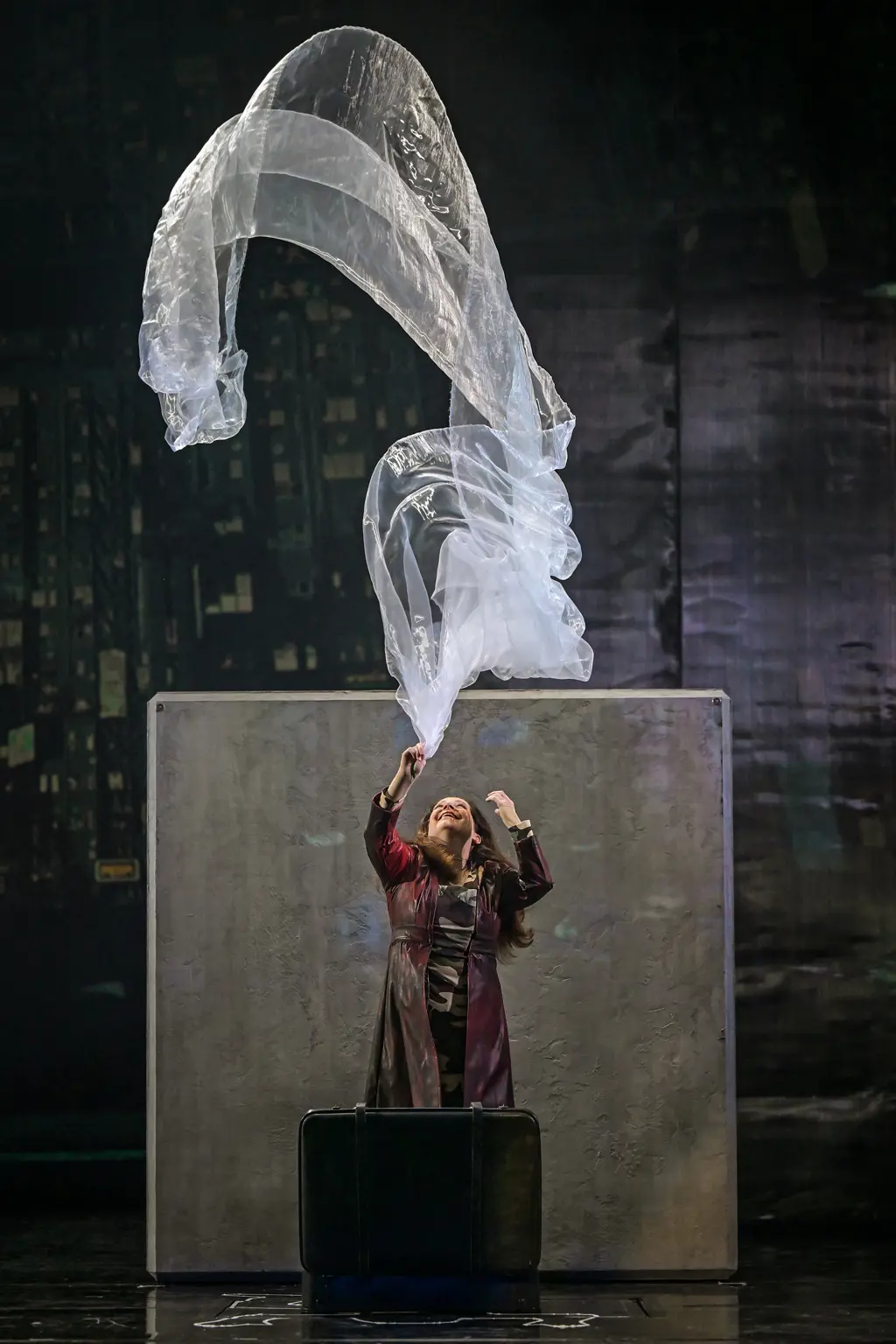
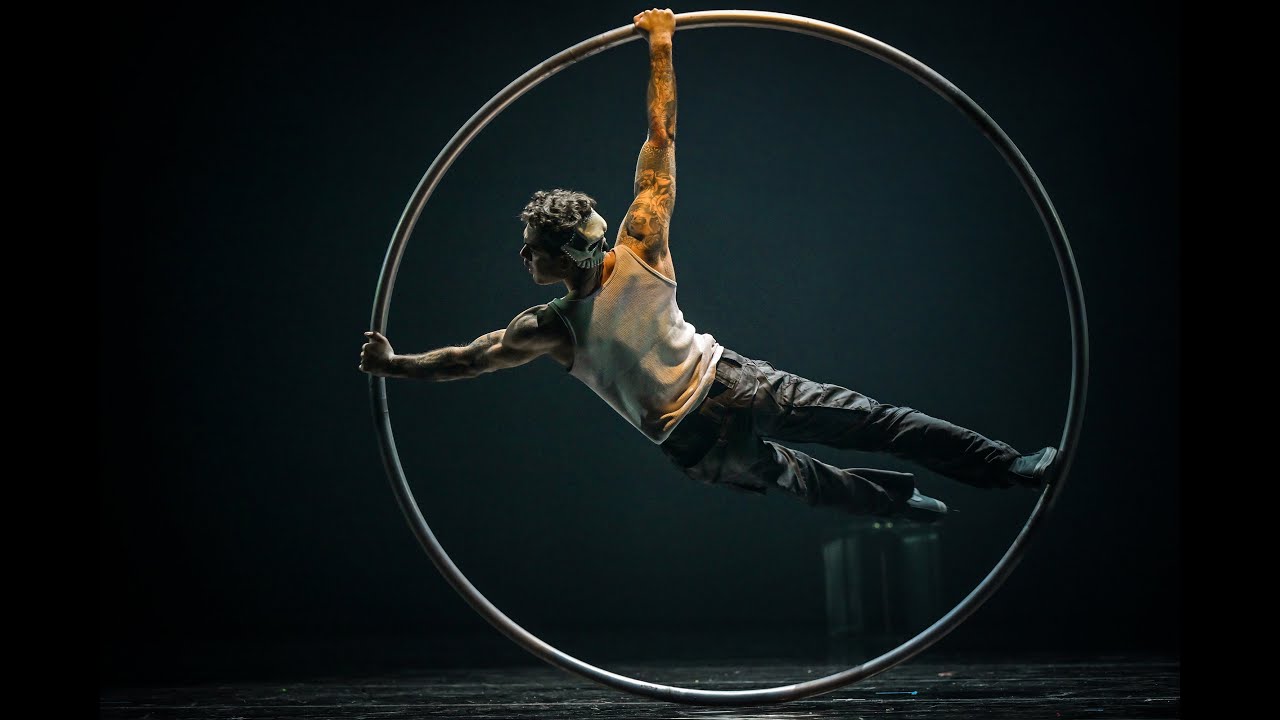
Die Schauspielkunst der Darsteller, die eindringlichen Gesangsleistungen, die mitreißenden Tanzeinlagen und die atemberaubende Artistik verschmelzen zu einem Gesamtkunstwerk, das die Grenzen zwischen den einzelnen Kunstformen verschwimmen lässt.
Das Videodesign von WE ARE VIDEO (Raphael Kurig und Christian Gasteiger), eingebettet in die Regiearbeit von Martina Veh, fügt eine weitere Dimension hinzu. Durch geschickt platzierte Projektionen und visuelle Effekte werden die verschiedenen Ebenen der Handlung zum Leben erweckt und die Zuschauer auf eine visuelle Reise mitgenommen, die das emotionale Erleben des Stücks vertieft und erweitert. Das Videodesign arbeitet mit Echtzeit-Technologien, Morphing und bildgebender KI: Das AI generierte Content basierend auf dem Videoinput einer vorher in Unreal-Engine gebauten modernen Stadt, interpretiert somit die Stadt in einem parallelen Vorgang.
Die Ausstattung von Christl Wein Engel bildet die perfekte Kulisse und schafft eine atmosphärische Umgebung, die die Handlung des Stücks optimal unterstützt. Sie hat in enger Zusammenarbeit gemeinsam mit Martina Veh die Fassung erstellt.
María de Buenos Aires
Tango operita by Astor Piazzolla, text by Horacio Ferrer
with texts by Italo Calvino in a version by Martina Veh
In Spanish with German surtitles,
A unique Gesamtkunstwerk of opera, poetry and dance – a homage to Buenos Aires and the tango, to human existence and urban ways of life
Kaiserslautern, 13 April 2024 - With "Maria de Buenos Aires" the Pfalztheater Kaiserslautern presents an interdisciplinary masterpiece, a breathtaking production that impresses not only through its musical brilliance but also unites music, acting, singing, dance, acrobatics and innovative video design, with a breathtaking use of artificial intelligence (WE ARE VIDEO from Munich).
Under the sensitive, intelligent direction of Martina Veh, Astor Piazzolla's tango opera unfolds into a moving requiem full of hope that carries the audience into a world between reality and fantasy. Martina Veh was not content with the local colour of the South American continent (which she knows very well herself) but, with the help of her clever version, to which she adds texts by Italo Calvino from "Invisible Cities" as well as a narrator figure (Olaf Becker), takes the German audience by the hand. Through her choreographies for the very diversely assembled dance ensemble, combined with acrobatics, she has created a touching theatre experience.
In terms of content it is about the big city as a way of life and a feeling of life, with all the joys and sufferings of living together before and after death. The tragic life story of the main character, Maria de Buenos Aires, who as a young woman, with all her hopes, wants to find her fortune in the city of life, stands for the fate and the struggle against time of each one of us in the various phases of life.
The press described the production as "An evening full of passion and sensuality, but also an evening full of melancholy and despair."
The acting of the performers, the haunting singing, the rousing dance interludes and the breathtaking acrobatics merge into a Gesamtkunstwerk that blurs the boundaries between the individual art forms.
The video design by WE ARE VIDEO (Raphael Kurig and Christian Gasteiger), embedded in Martina Veh's direction, adds a further dimension. Through skilfully placed projections and visual effects the various levels of the plot are brought to life and the audience is taken on a visual journey that deepens and expands the emotional experience of the piece. The video design works with real-time technologies, morphing and image-generating AI: the AI-generated content, based on the video input of a modern city previously built in Unreal Engine, thus interprets the city in a parallel process.
The set and costume design by Christl Wein Engel forms the perfect backdrop and creates an atmospheric environment that optimally supports the action of the piece. She created the version in close collaboration with Martina Veh.
Besetzung
Musikalische Leitung: Anton Legkii
Fassung, Regie & Choreographie: Martina Veh
Ausstattung: Christl Wein
Video: WeareVideo (Raphael Kurig / Christian Gasteiger)
Licht: Manfred Wilking
Chorleitung: Aymeric Catalano
Dramaturgie Andreas Bronkalla
Regieassistenz: Alicia Mayer
choreografische Assistenz: Anna Angelini
Künstlerische Beratung in argentinischer Kultur: German Icancic
Sprachcoach Argentinisch: Tamara Jazmín Odón
Soufflage: Peter Floch
Technik: Matthias Henche / Daniel Hoymann
Erzähler: Olaf Becker (Schauspieler)
Maria: Astrid Voßberg (Sängerin / Schauspielerin)
El Duende: Jonathan Möller Montenegro aus Chile (Akrobat / Schauspieler)
La sombra de Maria: Andrea Cisterna Munoz aus Chile (Akrobatin / Schauspielerin)
Payador / Gorron / Psychoanalyst / Voz de Domingo: Oscar Oré (Tenor)
Tanz & Choreographische Materialentwicklung: Anna Angelini, Astria Apel, Mariano Galeano, Saskia Hamala, Hojoon Moon, German Ivancic, Alberto Pagani
Tango Argentino & Choreographie: Astria Apel, Mariano Galeano
Modern Tango: German Ivancic
Pfalzphilharmonie Kaiserslautern / Chor des Pfalztheaters
Cast
Musical direction: Anton Legkii
Version, direction & choreography: Martina Veh
Set and costume design: Christl Wein
Video: WeareVideo (Raphael Kurig / Christian Gasteiger)
Lighting: Manfred Wilking
Chorus director: Aymeric Catalano
Dramaturgy Andreas Bronkalla
Assistant director: Alicia Mayer
Choreographic assistant: Anna Angelini
Artistic consultancy on Argentinian culture: German Icancic
Language coach, Argentinian Spanish: Tamara Jazmín Odón
Prompter: Peter Floch
Technology: Matthias Henche / Daniel Hoymann
Narrator: Olaf Becker (actor)
Maria: Astrid Voßberg (singer / actress)
El Duende: Jonathan Möller Montenegro from Chile (acrobat / actor)
La sombra de Maria: Andrea Cisterna Munoz from Chile (acrobat / actress)
Payador / Gorron / Psychoanalyst / Voz de Domingo: Oscar Oré (tenor)
Dance & choreographic material development: Anna Angelini, Astria Apel, Mariano Galeano, Saskia Hamala, Hojoon Moon, German Ivancic, Alberto Pagani
Argentine tango & choreography: Astria Apel, Mariano Galeano
Modern tango: German Ivancic
Pfalzphilharmonie Kaiserslautern / Chorus of the Pfalztheater
MEINE SICHTMY POINT OF VIEW
Interview – Maria De Buenos Aires – Martina Veh 20.01.2024 – Questions to the director, from Andreas Bronkalla
Astor Piazzolla’s “María de Buenos Aires” is a unique piece of music theatre. The composer calls it a “tango operita”, and of course tango music is very much present. How would you characterise this piece? Argentine folklore in a dimly lit bar? What does the tango mean?
It is about the big city as a way of life and a feeling of life, with all the joys and sorrows of living together: it is about the question of how social structures coexist, about exclusion, about the will to live and to survive, and about the abysses that social density brings with it. What is this big city? Who am I within this structure? That is a question that concerns all of us, today’s big-city nomads.
When I think about tango as a musical form, I have to go back a little further, above all so as not to end up, on any account, in folklore, in a cliché that does justice neither to this piece nor to the origins of traditional tango. Tango is a free, highly individual, improvised dance between two people who touch each other (tango means “I touch”). Buenos Aires has been shaped by millions of immigrants, battered by military dictatorship and economic crises, yet it has always risen again like a phoenix from the ashes. European emigrants search for happiness, for a new identity on the Rio de la Plata, in a young city that was founded (several times) only around 1540, again and again against the will of the indigenous people. In the 19th century, tango emerged on the poor outskirts of this immigrant city as music and dance in the taverns and dance halls and on the streets, in the gulf between rich and poor, hope and despair, in a milieu of unemployment, petty crime and prostitution: African-American elements that fused with the veneration of Catholic saints, the habanera that came from Cuba by way of Paris, the mazurka from Poland, the polka from Bohemia, the payadas of the rural gauchos, and from Germany the instrument of the bandoneon along with the waltz and the Ländler. Those, then, are the influences that created Argentine tango.
The inhabitants of Buenos Aires are on the one hand very proud of their culture, which today also includes a very large theatre and arts scene, and on the other hand deeply insecure: in no other city in the world are there so many psychotherapists.
This work, Maria de Buenos Aires, is absolutely unique because of the great courage that the composer and the lyricist had in 1968 to combine verbal, rhythmic and physical forms of expression that also define today’s big cities as places of human endeavour and the pursuit of happiness, in order to create, through influences from jazz and new music, an entirely new kind of tango music.
What kind of character is the title figure María? What is her story?
Piazzolla and Ferrer trace the stages in the life of a young woman in strong images, from being born into poverty with the determination to find her happiness in the city, to burning out in the maelstrom of life. It is about the elemental experience of love and loss, joy of life and death. The figure of Maria stands for the life path of each one of us.
The characters wander between worlds, and the stories do not end with death but continue a life of their own in the underworld as well. The first part is set in the real world, in which Duende, the primal spirit of the South American continent, pursues his Maria, the love of his life, as one of the undead. She dies: the second part takes place in the underworld, the city of the dead. The spirit descends into this underworld like an Orpheus in order to find his beloved. In the end he succeeds in being united with Maria. As in the Christian narrative brought over by the immigrants, Maria conceives and gives birth to God, again and again: a girl.
Interestingly, “María de Buenos Aires” also has many sacred moments, and the action often takes on features of a liturgy. What does that mean for your conception?
In my conception, the borrowings from religious images and icons do not form the content, but rather important material for association. These images are meaningful ways out for people when they find themselves in extreme situations, and in that respect they are of course significant in my world of images.
One notices very strongly in the work how, at the end of the 60s, Ferrer and Piazzolla were settling accounts with religious myths and images and placing human beings, city dwellers, at the centre – on the one hand quite simply in the role of a woman, Maria. On the other hand, the woman, this so-called Maria, stands for the icon of the city’s narrative, an earth goddess who in the end always gives birth to herself, gives birth to God, gives birth to the world or, conversely, devours the world. But why is the influence of religion on the South American continent so important to the two authors? Let us look back:
What shaped this “New World” when it was founded? The immigrants brought with them the belief in the Holy Mary, the hope that she would bring fair winds, so that a rich return to Europe might one day become possible. A myth, an image of longing, arose as a result. At the same time: in 1540 the painter Michelangelo completed the Last Judgement in the Sistine Chapel in Rome. The Church was in a great crisis at that time. Thanks to the gold from the South American conquests, it was able to afford a new upswing. On the ceiling of the Lateran, the seat of the Catholic archbishop, the melted-down gold of the Incas, for example, hangs as a coffered ceiling. A bitter history of colonialism. The two authors settle accounts with this as well.
Piazzolla also described his opera as a homage to the city of Buenos Aires. What makes Buenos Aires so special? Or does the Argentine metropolis stand for the phenomenon of the big city in general?
What interests me is the big city of today as a way of life and a feeling of life, with all the joys and sorrows of living together: it is about the question of how social structures coexist, about exclusion, about the will to live and to survive, and about the abysses that social density brings with it. What is this big city? Who am I within this structure?
What is particularly appealing is the thread that the piece spins onward into the world of the dead. I find this surrealism very fascinating, and, especially in today’s time of an often all too earthly and ideologically coloured black-and-white discourse, it lets our thoughts drift for a moment and possibly places them in a more nuanced context.
What role does dance play in your production? On our cast sheet you are also listed as choreographer …
The picture is that of urban life: reinforced concrete shapes our cities, a composite material of concrete and reinforcing steel: in it you see people going to work, waiting for the bus, quarrelling, kissing, begging, shopping, etc …
The action is surreal, yet atmospherically strong, sombre and suggestive. The poetic text carries much of the incomparable, eerily beautiful atmosphere of city life. The highly emotional images can certainly be conveyed very well in acting situations, music and text, but they are enriched by choreographic elements in the sense of dance theatre – on the one hand mass scenes, on the other a small ensemble of dancers, as well as wonderful South American acrobats – and made tangible at their core for the audience. Tango Argentino will also feature, or rather, what tango means on stage for us as city dwellers and as the ensemble of this theatre.
Interview – Maria De Buenos Aires – Martina Veh 20.01.2024 – Fragen an die Regisseurin von Andreas Bronkalla
Astor Piazzollas „María de Buenos Aires“ ist ein einzigartiges Stück Musiktheater. Der Komponist nennt es eine „Tango-Operita“ und natürlich ist Tango-Musik sehr präsent. Wie würdest du dieses Stück charakterisieren? Argentinien-Folklore in einer Schummerbar? Was bedeutet der Tango?
Es geht um die Großstadt als Lebensform und Lebensgefühl mit allen Freuden und Leiden des Zusammenlebens: Es geht um die Frage nach dem Miteinander sozialer Gefüge, um Ausgrenzung, um Lebens- und Überlebenswillen und die Abgründe, die die gesellschaftliche Dichte mit sich bringt. Was ist diese Großstadt? Wer bin ich in diesem Gefüge? Das ist eine Frage, die uns heutige Großstadt-Nomaden alle angeht.
Wenn ich über die Musikform des Tango nachdenke, so muss ich doch ein klein wenig weiter ausholen, vor allem um bitte auf keinen Fall in einer Folklore, einem Abziehbild zu landen, das weder diesem Stück, noch dem Ursprung des traditionellen Tango gerecht wird. Tango ist ein freier sehr individueller improvisierter Tanz zwischen zwei Menschen, die sich berühren (Tango bedeutet „ich berühre“). Buenos Aires ist geprägt von Millionen von Einwanderern, gebeutelt durch Militärdiktatur und Wirtschaftskrisen, doch immer auferstanden wie Phönix aus der Asche. Europäische Auswanderer suchen nach dem Glück, nach einer neuen Identität am Rio de la Plata, einer jungen Stadt, die erst etwa 1540 (mehrmals) gegründet wird, immer wieder gegen den Willen der Ureinwohner. An den armen Stadträndern der Einwandererstadt ist der Tango im 19. Jahrhundert entstanden als Musik und Tanz in den Kneipen und Tanzsälen und auf den Straßen in der Kluft zwischen Arm und Reich, Hoffnung und Verzweiflung, in einem Milieu von Arbeitslosigkeit, Kleinkriminalität und Prostitution: Afroamerikanischen Elemente, die mit der katholischen Heiligenverehrung verschmolzen, die Habanera aus Kuba gelangte über Paris hinzu, aus Polen kam die Mazurka, aus Böhmen die Polka, von den ländlichen Gauchos die Payadas und aus Deutschland das Instrument des Bandoneons mit Walzer und Ländler. Das also sind die Einflüsse, die den argentinischen Tango geschaffen haben.
Die Bewohner von Buenos Aires sind zum einen sehr stolz auf ihre Kultur, die heute auch aus einer sehr großen Theater- und Kunstszene besteht, zum anderen zutiefst verunsichert: In keiner anderen Stadt der Welt gibt es so viele Psychotherapeuten.
Dieses Werk, Maria de Buenos Aires, ist absolut einzigartig durch jede Menge Mut, die der Komponist und auch der Textdichter 1968 besaßen, verbale, rhythmische und körperliche Ausdrucksformen zu kombinieren, die auch die heutigen Großstädte als Orte menschlichen Wirkens und Glücksstrebens ausmacht, um durch Einflüsse aus Jazz und neuer Musik eine ganz neue Art von Tango-Musik zu erschaffen.
Was ist die titelgebende María für eine Figur? Was ist ihre Geschichte?
Piazolla und Ferrer zeichnen die Stationen im Lebensweg einer jungen Frau in starken Bildern nach, vom Geboren-Werden in Armut mit dem Willen ihr Glück zu finden in der Stadt und dem Verglühen im Strudel des Lebens. Es geht um das elementare Erfahren von Liebe und Verlust, Lebensfreude und Tod. Die Figur der Maria steht für den Lebensweg eines jeden von uns.
Die Figuren wandeln zwischen den Welten und die Geschichten enden nicht mit dem Tod, sondern führen auch in der Unterwelt ihr Eigenleben weiter. Der erste Teil spielt in der realen Welt, in der Duende, der Urgeist des Südamerikanischen Kontinents als Untoter seine Maria, die Liebe seines Lebens, verfolgt. Sie stirbt: Der zweite Teil findet in der Unterwelt statt, der Stadt der Toten. Der Geist steigt wie ein Orpheus in diese Unterwelt hinab, um seine Geliebte zu finden. Es gelingt ihm schließlich, sich mit Maria zu vereinen. Wie in der durch die Einwanderer mitgebrachten christlichen Erzählung empfängt Maria und gebiert Gott, immer und immer wieder: Ein Mädchen.
Interessanterweise gibt es in „María de Buenos Aires“ auch viele sakrale Momente, die Handlung vielfach auch Züge einer Liturgie. Was bedeutet das für deine Konzeption?
In meiner Konzeption bilden die Anleihen der religiösen Bilder und Ikonen nicht den Inhalt, sondern wichtiges Assoziationsmaterial. Diese Bilder sind sinnstiftende Auswege für die Menschen, wenn sie sich in Extremsituationen befinden und insofern natürlich von Bedeutung in meiner Bilderwelt.
Man merkt ganz stark in dem Werk wie Ferrer und Piazzolla Ende der 60er Jahre gerade mit den religiösen Mythen und Bildern abrechnen und den Menschen, den Stadtmenschen ins Zentrum stellen – einerseits ganz einfach in der Rolle einer Frau, Maria. Anderseits steht die Frau, diese sogenannte Maria für die Ikone der Stadterzählung, Erdgöttin, die am Ende immer sich selbst gebiert, Gott gebiert, die Welt gebiert oder umgekehrt die Welt verschlingt. Doch warum ist der Einfluss der Religion auf dem Südamerikanischen Kontinent so wichtig für die beiden Autoren? Blicken wir zurück:
Was prägte diese „Neue Welt“ als sie gegründet wurde? Die Einwanderer brachten den Glauben an die Heilige Maria mit in das Land, die Hoffnung, dass sie gute Winde bringe, so dass eine reiche Heimkehr nach Europa eines Tages möglich werde. Ein Mythos, ein Sehnsuchtsbild ist dadurch entstanden. Gleichzeitig: 1540 hat der Maler Michelangelo in der Sixtinischen Kapelle in Rom des Jüngste Gericht vollendet. Die Kirche steckte damals in einer großen Krise. Durch das Gold aus den südamerikanischen Eroberungen konnte sie sich einen neuen Aufschwung leisten. An der Decke des Lateran, des katholischen Erz-bischofssitzes, hängt beispielsweise eingeschmolzen das Gold der Inka als Kassettendecke. Bittere Geschichte des Kolonialismus. Auch hiermit rechnen die beiden Autoren ab.
Piazzolla bezeichnete seine Oper auch als Hommage an die Stadt Buenos Aires. Was macht Buenos Aires so besonders? Oder steht die argentinische Metropole für das Phänomen Großstadt im Allgemeinen?
Es geht mir um die heutige Großstadt als Lebensform und Lebensgefühl mit allen Freuden und Leiden des Zusammenlebens: Es geht um die Frage nach dem Miteinander sozialer Gefüge, um Ausgrenzung, um Lebens- und Überlebenswillen und die Abgründe, die die gesellschaftliche Dichte mit sich bringt. Was ist diese Großstadt? Wer bin ich in diesem Gefüge?
Besonders reizvoll ist der Faden, den das Stück weiterspinnt in die Welt der Toten. Dieser Surrealismus fasziniert mich sehr und lässt uns gerade in der heutigen Zeit des oft allzu irdisch und ideologisch gefärbten schwarz-weiss Diskurses die Gedanken mal schweben und möglicherweise in einen differenzierteren Kontext bringen.
Welche Rolle spielt der Tanz in deiner Inszenierung? Auf unserem Besetzungszettel stehst du auch als Choreographin …
Das Bild ist das eines Stadtgeschehens: Stahlbeton prägt unsere Städte, ein Verbundwerkstoff aus Beton und Bewehrungsstahl: Darin sieht man Menschen, die zur Arbeit gehen, auf den Bus warten, sich streiten, küssen, betteln, einkaufen, etc…
Die Handlung ist surreal, aber atmosphärisch stark, düster und suggestiv. Im poetischen Text schwingt viel von der unvergleichlichen, schaurig-schönen Atmosphäre des Stadtgeschehens mit. Die hochemotionalen Bilder lassen sich zwar sehr gut in Spielsituationen, Musik und Text wiedergeben, werden aber durch choreografische Elemente im Sinne von Tanztheater, einerseits Massenszenen, andererseits kleines Tänzerensemble, sowie wunderbare südamerikanische Akrobaten, bereichert und im Kern erfahrbar für das Publikum. Auch Tango Argentino wird vorkommen, oder besser gesagt das, was Tango für uns als Bewohner der Städte und als Ensemble dieses Theaters auf der Bühne bedeutet.
GALERIEGALLERY
VideoVideo
PRESSE
Die Presse beschrieb die Inszenierung als "Ein Abend voller Leidenschaft und Sinnlichkeit, ein
Abend aber auch voller Melancholie und Verzweiflung."
Die Schauspielkunst der Darsteller, die eindringlichen Gesangsleistungen, die mitreißenden
Tanzeinlagen und die atemberaubende Artistik verschmelzen zu einem Gesamtkunstwerk, das
die Grenzen zwischen den einzelnen Kunstformen verschwimmen lässt.
PRESS
The press described the production as "An evening full of passion and sensuality, but also an evening full of melancholy and despair."
The acting of the performers, the haunting singing, the rousing dance interludes and the breathtaking acrobatics merge into a Gesamtkunstwerk that blurs the boundaries between the individual art forms.