WERKWORK
UA fliegender teppich-odyssee (S.Altan/A.Elkana/G.Koumendakis)
World premiere flying carpet - odyssey (S.Altan/A.Elkana/G.Koumendakis)
FLIEGENDER TEPPICH 2013 – ODYSSEE
Drei Zeitgenössische Kurzopern
FLYING CARPET 2013 – ODYSSEY
Three Contemporary Short Operas
Besetzung
Musik:
lotus: Sinem Altan (Türkei /Berlin)
the journey home: Amos Elkana (Israel/Tel Aviv)
omiros-orimos: Giorgos Koumendakis (Griechenland)
Uraufführung: 4. Oktober 2013, 20:00 Uhr, Gasteig, Carl-Orff-Saal, München
Weitere Aufführungen: 5./6. Oktober 2013
Idee/Musikal. Leitung: Konstantia Gourzi
Regie: Martina Veh
Regieassistent: Caner Akdeniz
Bühne/Kostüme: Alexander Polzin
Ausstattungsassistent: Claudia Weinhard
Licht: Wieland Müller-Haslinger
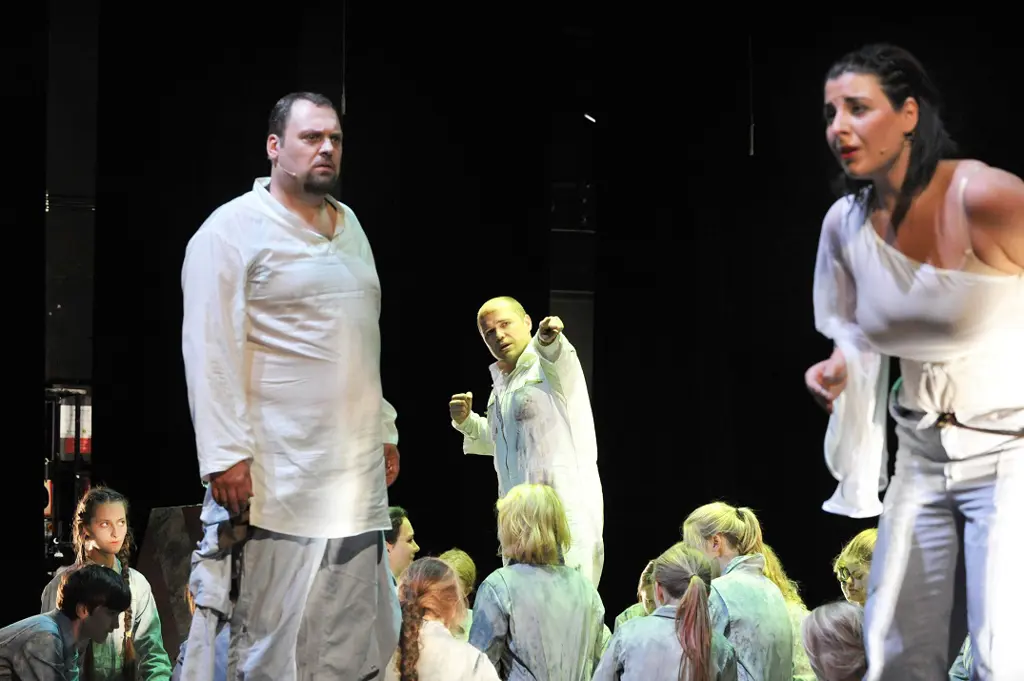
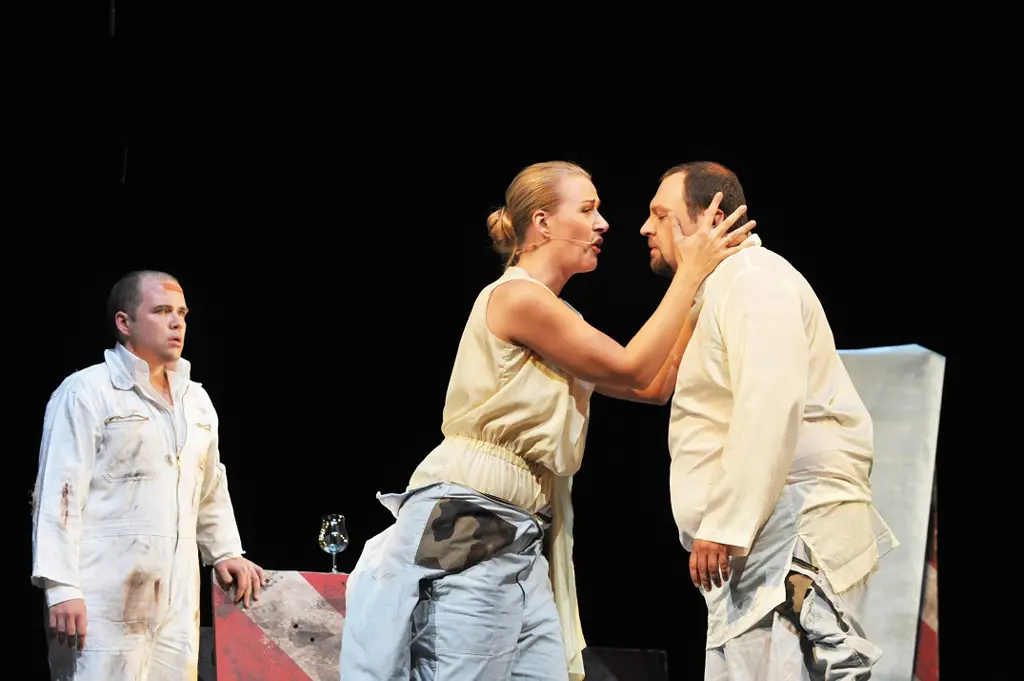
Fotos: Norbert Banik
Mitwirkende: Anna Stylianaki, Susanne Drexl, Aco Biscevic und Raphael Sigling,
Kinderchor der Bayerischen Staatsoper (Stellario Fagone)
Orchester: Ensemble opus21musikplus
Produktionsleitung: Alexandra Zöllner
Cast
Music:
lotus: Sinem Altan (Turkey /Berlin)
the journey home: Amos Elkana (Israel/Tel Aviv)
omiros-orimos: Giorgos Koumendakis (Greece)
World premiere: 4 October 2013, 8:00 pm, Gasteig, Carl-Orff-Saal, Munich
Further performances: 5/6 October 2013
Idea/musical direction: Konstantia Gourzi
Direction: Martina Veh
Assistant director: Caner Akdeniz
Set/costumes: Alexander Polzin
Design assistant: Claudia Weinhard
Lighting: Wieland Müller-Haslinger
Photos: Norbert Banik
Participants: Anna Stylianaki, Susanne Drexl, Aco Biscevic and Raphael Sigling,
Children's chorus of the Bavarian State Opera (Stellario Fagone)
Orchestra: Ensemble opus21musikplus
Production management: Alexandra Zöllner
MEINE SICHTMY POINT OF VIEW
About the piece:
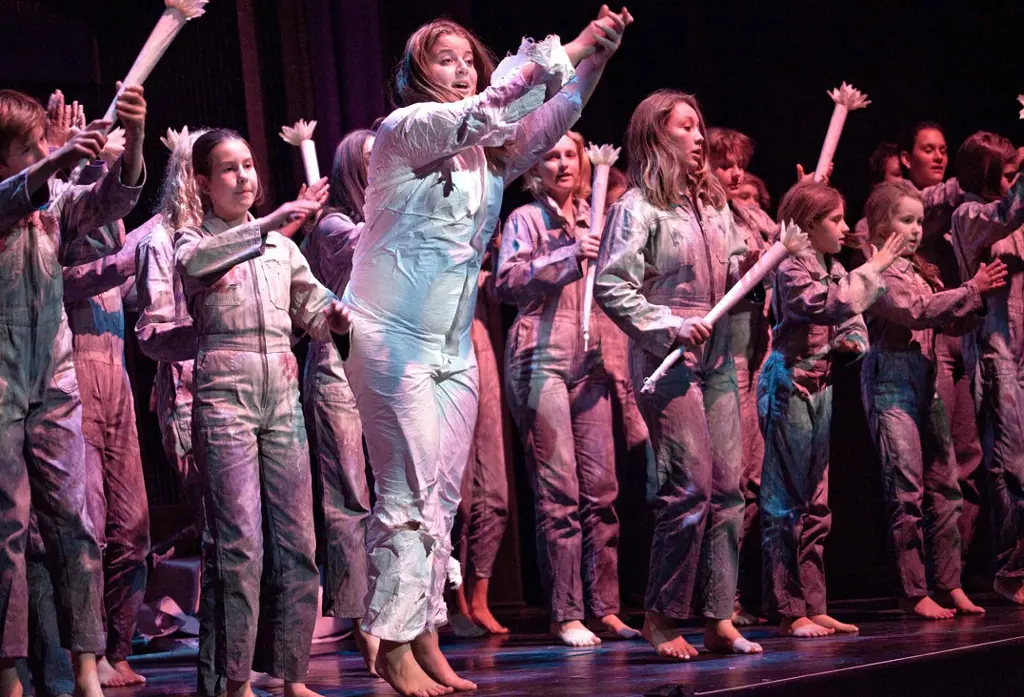
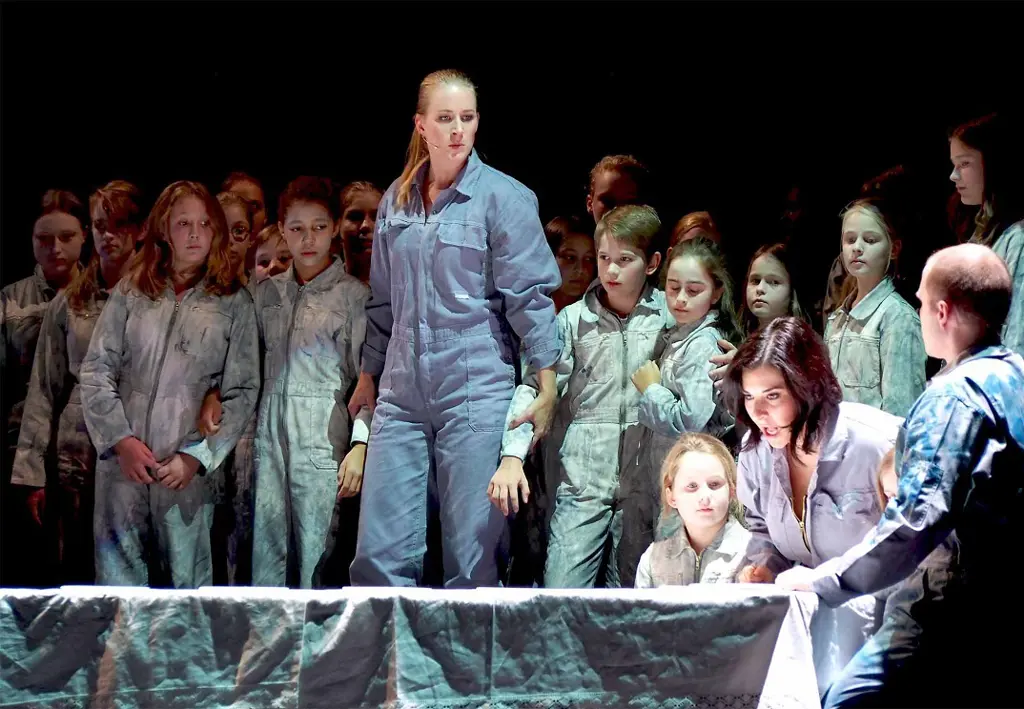
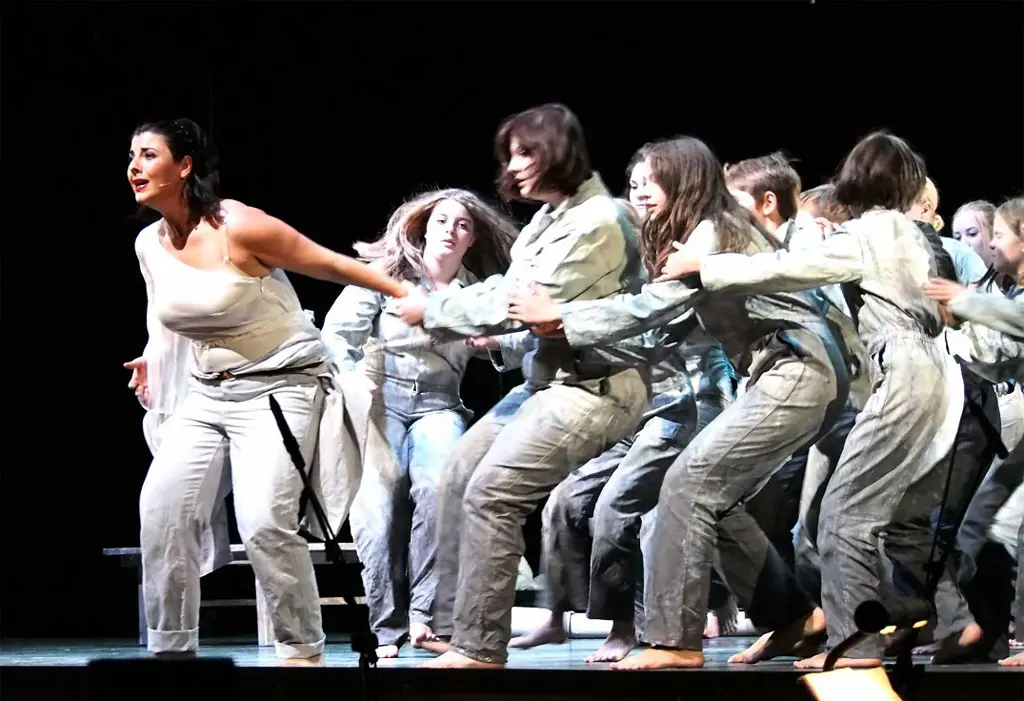
Three short operas on the themes of migration/integration, courageous action and the failure of the hero, and homecoming: these compositions, commissioned by Konstantia Gourzi (opus21 musikplus), conclude an education programme begun five years ago with the intention of bringing primary schools in Munich into contact with new music in connection with myths and fairy tales from all over the world. The myth of the Odyssey is placed on a contemporary carpet and brought to life in Munich by the children's chorus of the Staatsoper München, four renowned soloists and the neue musik ensemble opus 21 of Konstantia Gourzi.
Synopsis:
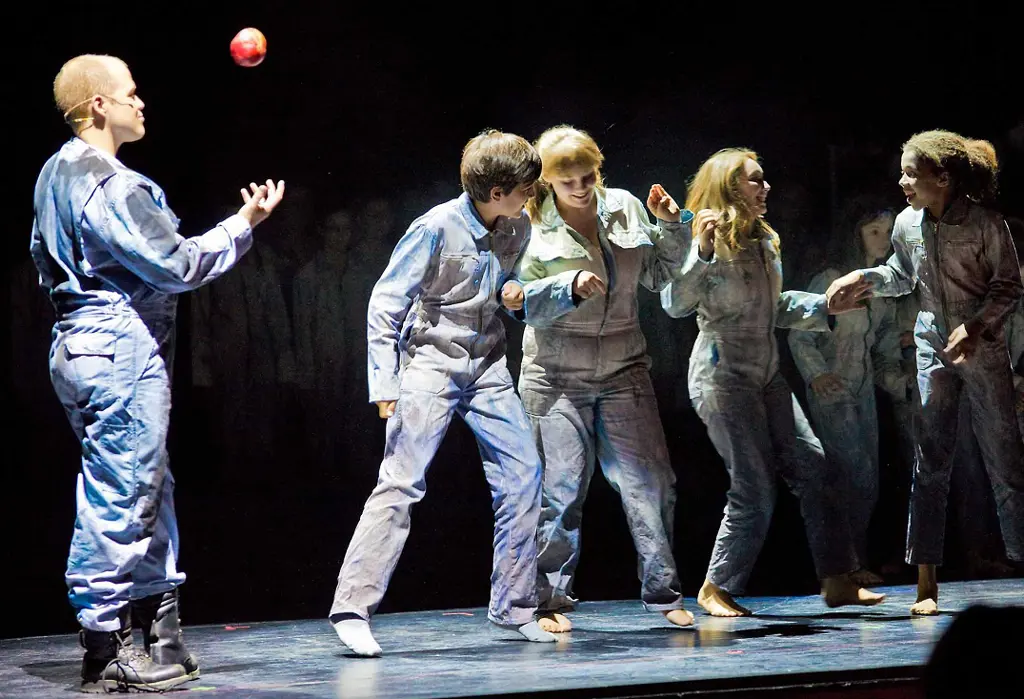
A glamorous, mysterious player – it could be Odysseus, hero of the Occident, legendary charlatan – leads us in all kinds of roles through the three short operas.
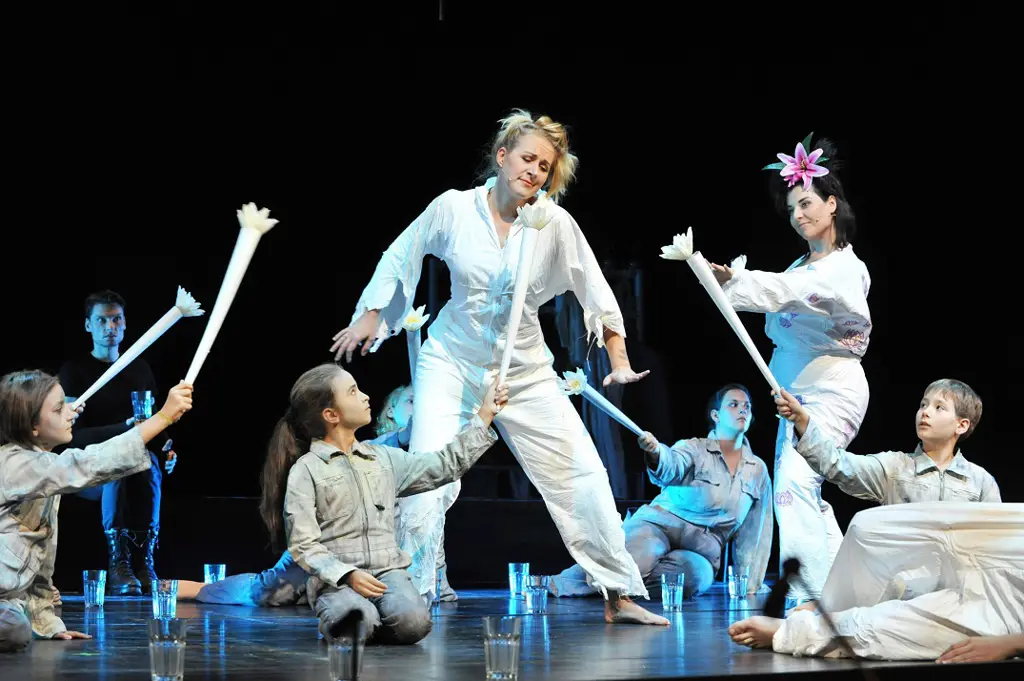
1. LOTUS-INSEL (short opera by Sinem Altan)
A brother and sister are stranded with their mother on a strange lotus island, a water world, a world of water lilies and creepers, a world of intoxication and forgetting, without firm ground, but also a world of hope.
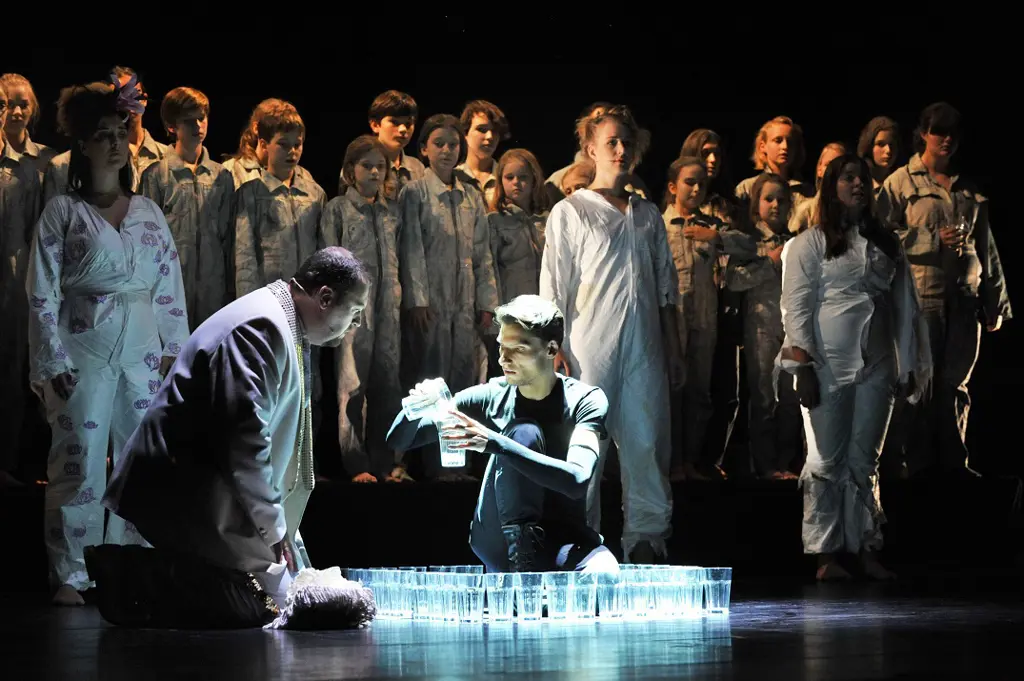
They are searching for a cure for their ailing mother. She suffers from her identity, a half-full or half-empty glass of water always being called into question.
To which world does the recovered mother want to return in the end? No matter which world this is – if it calls itself “home” and feels like home, then this is the longing. And what happiness, in turn, do Nilufer (a species of water lily) and her plant world hope for, whose world is not healthy either? Or is this plant world, which devours people and hopes, simply a principle of nature? An automatism, instinctively taking what brings balance, a recovery, to that world.
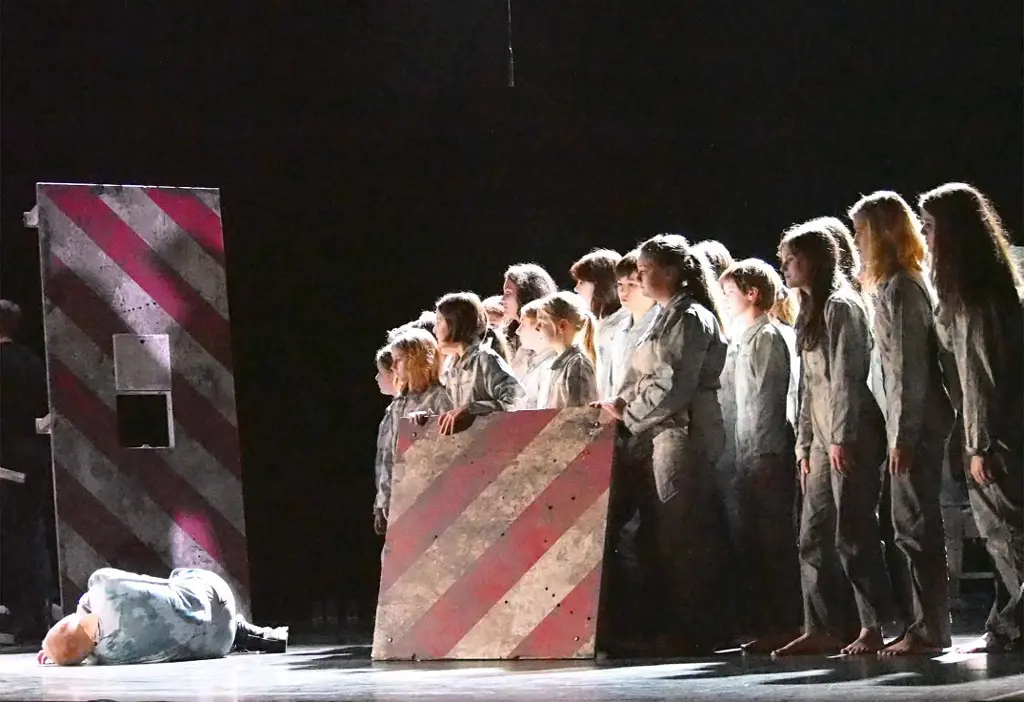
2. THE JOURNEY HOME (short opera by Amos Elkana)
A young man, a Palestinian Arab, decides to emigrate to Jerusalem, converts to Judaism, finds a Jewish wife and soon has a family of ten. However, the prejudices of his mother-in-law lead to daily family quarrels. One evening, in despair, he leaves the house. He is arrested. His Arab parents track him down and he is allowed to leave prison on the condition that he returns to Nablus, with no possibility of contacting his Hebrew family. He converts back to Islam, marries an Arab woman and has a family of twelve. He dies. The Jewish and the Arab family both attend his funeral. Based on a true story.
Martina Veh describes this short opera as the nucleus of an evening-length work. In glaringly sharp, almost documentary-film-like flashes, this composition gets on the trail of the protagonist's human life situations, whose entire life is marked by courage, failure and the great struggle between two equally valid identities: the chosen identity and being thrown into an identity structure given at birth. This too can resurface anew in the course of a life and perhaps be up for choice. In hardly any other story – and the libretto is written after a true story – can it become so clear what the question of choosing or creating one's own identity can mean, especially in times of war, violence and persecution.
3. OMIROS-ORIMOS (short opera by Giorgos Koumendakis)
Space. Time. Growing up.
The homecoming of the “great” Odysseus: a story that can take place in any family today, too, whose mythological validity is all the more striking.
Perhaps Odysseus, in his search for his self, never left his home at all.
What happens after the longed-for homecoming? How is the world that Odysseus left behind dealt with? The world of a hero? The world of a charlatan? The world of his permanent absence? What image do people form of a family member who is always absent, and how do they treat him as soon as he tries to come home?
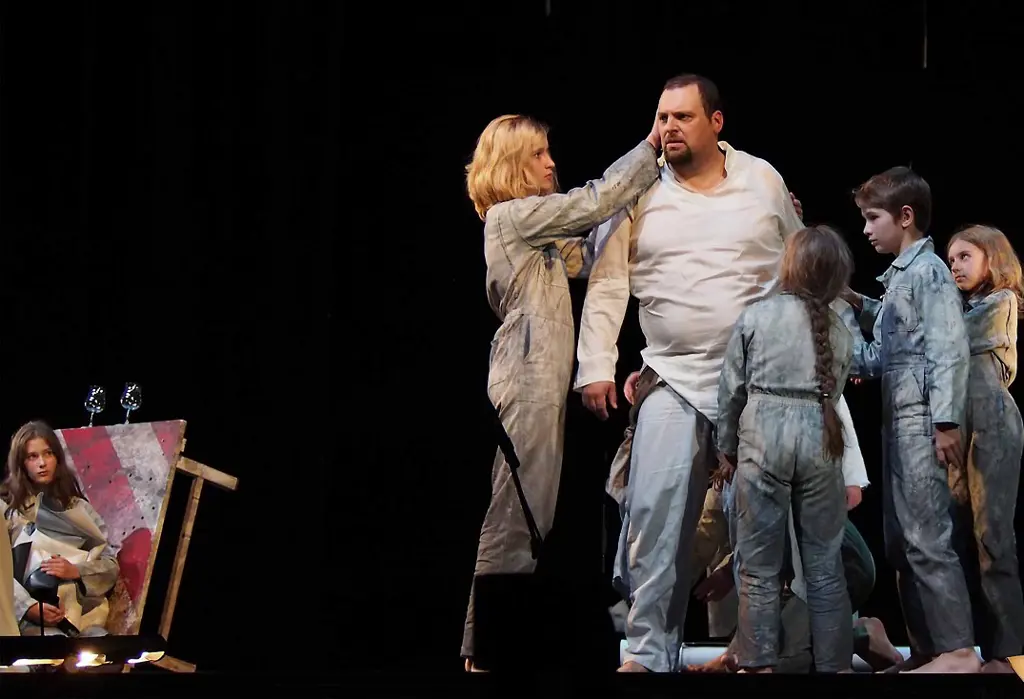
Odysseus meets his son Telemachos, his dog, his blind nurse Euryclia and his wife Penelopé. In the end Odysseus hands over his role as the seeker to the children.
A world comes to an end, disappears or is “gambled away”, another world, a new world.
A look at the characters:
Odysseus, hero of Western culture! Yet if one looks more closely at Homer's texts, what we find above all is a good storyteller. Does Odysseus tell the truth? And if so, which truth? How does this Odysseus want to tell his own story: the warrior! Lion in the blood – into battle with a roar, whose wisdom and clever actions are pioneering? It is he who is said to measure the space of the world without pause and thereby evade a homecoming.
Tilemaxos, the son, embarks on growing up through the active search for and encounter with his father, who calls on him to act. He is the first, even before the suitors, to try to string the bow of Odysseus in the last scene of the opera, when the children compete and argue over who may prove himself in the archery
contest. When Odysseus meets his dying dog, it becomes clear to him in that moment that he has irrevocably missed the growing up and the time of his dog's fine strength in running, and also the growing up of his son. The blind nurse Evriklia keeps herself alive through the hope of the absent master of the house's homecoming and the restoration of the order she imagines, coupled with a thirst for bloody vengeance. For Penelope it is above all the passing of time that plays the main role, and all the fears and rigidity of mind and soul that go with it. Opposites within her collide: patience and impatience, loving memory and anger, pride and shame. At first Penelope and Odysseus have almost nothing to say to each other. Odysseus even has to be forced to face his wife. She is completely rigid and cold. Fear and scepticism determine the situation. Only after the couple have slept together can they begin to tell each other their true lives.
Excerpt from an interview:
What is special for you about doing a work with children and also for children in this opera production? An evening on which children are portrayed on an equal footing with adults,
act and sing?
There is nothing special about it at all. In my opinion children are people like all other people. After all, they live in the same world as adults. As a director, the term “children's opera” means nothing to me. The only thing I dare say is that some children have not yet completely lost, within the so-called education system, their unselfconscious readiness to ask questions and their honest curiosity. In that respect one might perhaps say that children are a more uninhibited and therefore stricter audience. As performers they are just as diligent and interested as all other singers. The particularity lies rather in the fact that it is a chorus, which plays a very large role in all three operas. In terms of content, the evening poses a much more essential question: what world we leave to our children. That is not a question for a nursery around which one builds a bell jar of anxiety in a very affluent society in which even the child as such is declared a special thing and a status symbol, but a global question that all people must face. This is precisely what is special for me about this very international production: that we all come from very different countries and cultures I find irrelevant. That is the case in many music theatre productions. But that we all engage artistically with this question out of our differences, that I find incredibly moving. (Martina Veh)
The production is under the patronage of Emilia Müller, Bavarian State Minister for Federal and European Affairs; the Consulate General of the Republic of Turkey in Munich, Consul General Kadir Hidayet Eris, the Consulate General of Israel in Munich, Consul General Dr. Dan Shahan, and the Consulate General of Greece in Munich, Consul General Sofia Grammata
Supported by the Ernst von Siemens Musikstiftung in cooperation with BR-Klassik, Kulturfonds Bayern, Landeshauptstadt München, Onassis Foundation, Susanne Wamsler, Ingrid Werndl-Laue Stiftung, Aegean Airlines, Griechische Akademie e.V. ISBANK, Christoph und Stephan Kaske Stiftung, Paros, Grarden Club of Bavaria, Mr and Mrs Prof. Nickl, Dr. Robert Schmucker, Stadtsparkasse München, Ingeborg Stachel Stiftung, Maria Wimmer Stiftung, Stehcafé Dalkaya, C.H.Beck Stiftung
Zum Stück:
Drei Kurzopern zu den Themen Migration/Integration, mutiges Handeln und Scheitern des Helden und die Heimkehr: Diese von Konstantia Gourzi (opus21 musikplus) in Auftrag gegebenen Kompositionen schließen ein education program ab, das vor 5 Jahren begonnen wurde mit der Intention, Neue Musik im Zusammenhang mit Mythen und Märchen aus aller Welt mit Grundschulen in München in Berührung zu bringen. Der Mythos der Odyssee wird auf einen zeitgenössischen Teppich gebracht und vom Kinderchor der Staatsoper München, vier namhaften Solisten und dem neue musik ensemble opus 21 von Konstantia Gourzi in München umgesetzt.
Inhalt:
Ein glamouröser mysteriöser Spieler – es könnte Odysseus sein, Held des Abendlandes, sagenhafter Scharlatan – führt uns in allerlei Rollen durch die drei kurzen Opern.
1. LOTUS-INSEL (Kurzoper von Sinem Altan)
Ein Geschwisterpaar strandet mit seiner Mutter auf einer seltsamen Lotus-Insel, eine Wasserwelt, eine Welt der Seerosen, der Schlingpflanzen, eine Welt des Rausches, des Vergessens, ohne festen Boden, aber auch eine Welt der Hoffnung.
Sie sind auf der Suche nach Heilung ihrer erkrankten Mutter. Diese leidet an ihrer Identität, ein halb volles oder halb leeres Glas Wasser immer bezweifelt werden.
In welche Welt will die gesundete Mutter am Ende wieder zurückkehren? Egal, welche Welt dies ist – wenn sie sich „Heimat“ nennt und sich wie Heimat anfühlt, so ist dies die Sehnsucht. Welches Glück wiederum erhoffen sich Nilufer (eine Wasserrosenart) und ihre Pflanzenwelt, deren Welt auch nicht gesund ist? Oder ist diese Menschen- und Hoffnungen verschlingende Pflanzenwelt einfach nur ein Naturprinzip? Ein Automatismus, sich instinktiv das zu holen, was einen Ausgleich, jener Welt eine Gesundung verschafft.
2. THE JOURNEY HOME (Kurzoper von Amos Elkana)
Ein junger Mann, ein palästinensischer Araber, beschließt nach Jerusalem auszuwandern, konvertiert zum Judentum, findet eine jüdische Frau und hat bald eine 10köpfige Familie. Die Vorurteile der Schwiegermutter führen jedoch zu täglichem Familienstreit. Er verlässt eines Abends in Verzweiflung das Haus. Er wird gefangengenommen. Seine Arabischen Eltern machen ihn ausfindig und er darf das Gefängnis verlassen unter der Bedingung, nach Nablus zurückzukehren, ohne Möglichkeit für ihn, Kontakt zu seiner hebräischen Familie aufzunehmen. Er konvertiert zurück zum Islam, heiratet eine arabische Frau und hat eine 12-köpfige Familie. Er stirbt. Die jüdische und die arabische Familie nehmen teil an seinem Begräbnis. Nach einer wahren Begebenheit.
Diese Kurzoper bezeichnet Martina Veh als Nukleus zu einem abendfüllenden Werk. In gleißend scharfen, geradezu dokumentarfilmischen Schlaglichtern kommt diese Komposition den menschlichen Lebenssituationen des Protagonisten auf die Spur, dessen gesamtes Leben von Mut, Scheitern und dem großen Kampf zwischen zwei gleichwertigen Identitäten geprägt ist: Die Wahlidentität und das Geworfen-Sein in eine von Geburt gegebene Identitätsstruktur. Auch diese kann im Laufe eines Lebens als neu wieder auftauchen und vielleicht zur Wahl stehen. In kaum einer anderen Geschichte – und das Libretto ist nach einer wahren Begebenheit geschrieben – kann so klar werden, was die Frage nach der Wahl oder der Schaffung der eigenen Identität bedeuteten kann, gerade in Zeiten von Krieg, Gewalt und Verfolgung.
3. OMIROS-ORIMOS (Kurzoper von Giorgos Koumendakis)
Raum. Zeit. Erwachsenwerden.
Die Heimkehr des „großen“ Odysseus: eine Geschichte wie sie in jeder auch heutigen Familie stattfinden kann, deren mythologische Gültigkeit umso augenfälliger ist.
Vielleicht hat Odysseus ja auf der Suche nach seinem Selbst seine Heimat nie verlassen.
Wie geht es weiter nach der ersehnten Heimkehr? Wie wird umgegangen mit der von Odysseus hinterlassenen Welt? Die Welt eines Helden? Die Welt eines Scharlatan? Die Welt seiner permanenten Abwesenheit? Welches Bild schaffen sich die Menschen von einem immer abwesenden Familienmitglied und wie gehen sie mit ihm um sobald er versucht heimzukehren?
Odysseus begegnet seinem Sohn Telemachos, seinem Hund, seiner blinden Amme Euryclia und seiner Frau Penelopé. Zum Schluss gibt Odysseus seine Rolle als Suchender ab an die Kinder.
Eine Welt geht zu Ende, verschwindet oder wird „verspielt“, eine andere Welt, eine neue Welt.
Ein Blick auf die Figuren:
Odysseus, Held der Abendländischen Kultur! Doch blickt man genauer in die Texte Homers, so finden wir vor allem einen gutenErzähler. Erzählt Odysseus die Wahrheit? Und wenn ja, dann welche Wahrheit? Wie will er sich erzählen dieser Odysseus: Der Krieger! Löwe im Blut – mit Gebrüll in den Kampf, dessen Weisheit und kluges Handeln wegweisend sind? Er ist es, der angeblich pausenlos den Raum der Welt durchmisst und sich damit einer Heimkehr entzieht.
Tilemaxos, der Sohn tritt das Erwachsenwerden an durch die aktive Suche und Begegnung mit seinem Vater, der ihn zum Handeln auffordert. Er ist der erste, noch vor den Freiern, der versucht, den Bogen des Odysseus zu spannen im letzten Bild der Oper, wenn sich die Kinder im Wettbewerb darum streiten, wer sich im Bogenkampf
bewähren darf. Als Odysseus seinem sterbenden Hund begegnet, wird ihm in diesem Moment klar, dass er unwiderruflich das Heranwachsen und die Zeit der schönen Laufkraft seines Hundes, und auch das Heranwachsen seines Sohnes verpasst hat. Die blinde Amme Evriklia hält sich durch die Hoffnung auf die Heimkehr des abwesenden Hausherrn und die Wiederherstellung der von ihr imaginierten Ordnung gepaart mit dem Durst nach blutiger Vergeltung am Leben. Für Penelope hat vor allem das Verstreichen der Zeit die Hauptrolle inne und alle damit verbundenen Ängste und Erstarrungen des Geistes und der Seele. In ihr vorhandene Gegensätze, prallen aufeinander: Geduld und Ungeduld, liebende Erinnerung und Zorn, Stolz und Scham. Penelope und Odysseus haben sich zunächst fast nichts zu sagen. Odysseus muss sogar gezwungen werden, sich seiner Frau zu stellen. Diese ist vollkommen erstarrt und kalt. Angst und Skepsis bestimmen die Situation. Erst nachdem das Paar dann miteinander geschlafen hat, können sie beginnen sich ihr wahres Leben zu erzählen.
Ausschnitt aus einem Interview:
Was ist für Sie das Besondere daran, in dieser Opernproduktion eine Arbeit mit Kindern und auch für Kinder zu machen? Ein Abend, an dem Kinder gleichberechtigt mit Erwachsenen
dargestellt werden, handeln und singen?
Daran ist gar nichts besonders. Meiner Meinung nach sind Kinder Menschen wie alle anderen Menschen auch. Sie leben ja auch in der gleichen Welt wie die Erwachsenen. Als Regisseur kann ich mit dem Begriff Kinderoper nichts anfangen. Das einzige, was ich zu sagen wage ist, dass manche Kinder ihre Unbefangenheit Fragen zu stellen und ihre ehrliche Neugierde noch nicht komplett im sogenannten Bildungssystem verloren haben. Insofern könnte man vielleicht sagen, dass Kinder ein unbefangeneres und somit strengeres Publikum sind. Als Darsteller sind sie ebenso fleißig und interessiert wie alle anderen Sänger auch. Die Besonderheit liegt eher darin, dass es ein Chor ist, der in allen drei Opern eine sehr große Rolle spielt. Inhaltlich stellt der Abend eine viel wesentlichere Frage: Welche Welt wir den Kindern hinterlassen. Das ist keine Frage für ein Kinderzimmer, um das man eine Angstglocke baut in einer sehr wohlhabenden Gesellschaft, in der sogar das Kind an sich zur Besonderheit und zum Statussymbol erklärt wird, sondern es handelt sich dabei um eine globale Frage, der sich alle Menschen stellen müssen. Genau dies ist für mich die Besonderheit an dieser sehr internationalen Produktion: Dass wir alle aus sehr unterschiedlichen Ländern und Kulturen kommen, finde ich unerheblich. Das ist in vielen Musiktheaterproduktionen der Fall. Aber dass wir uns alle aus unserer Unterschiedlichkeit heraus mit dieser Frage künstlerisch auseinandersetzen, das ist für mich unglaublich bewegend. (Martina Veh)
Die Produktion steht unter der Schirmherrschaft von Emilia Müller, Bayerische Staatsministerin für Bundes- und Europaangelegenheiten; dem Generalkonsulat der Republik Türkei in München, Generalkonsul Kadir Hidayet Eris, dem Generalkonsulat von Israel in München, Generalkonsul Dr. Dan Shahan und dem Generalkonsulat von Griechenland in München Generalkonsulin Sofia Grammata
Unsterstützt von der Ernst von Siemens Musikstiftung in Kooperation mit BR-Klassik, Kulturfonds Bayern, Landeshauptstadt München, Onassis Foundation, Susanne Wamsler, Ingrid Werndl-Laue Stiftung, Aegean Airlines, Griechische Akademie e.V. ISBANK, Christoph und Stephan Kaske Stiftung, Paros, Grarden Club of Bavaria, Herrn udn Frau Profs. Nickl, Dr. Robert Schmucker, Stadtsparkasse München, Ingeborg Stachel Stiftung, Maria Wimmer Stiftung, Stehcafé Dalkaya, C.H.Beck Stiftung
GALERIEGALLERY