WERKWORK
UA UT-OP.er (M. Veh/A. Strauch)
World premiere UT-OP.er (M. Veh/A. Strauch)
UT-OP.er
Oder das ewige Jetzt
frei nach «Utopia» von Thomas Morus aus dem Jahr 1516
Musiktheater von Alexander Strauch (Musik) und Martina Veh (Text)
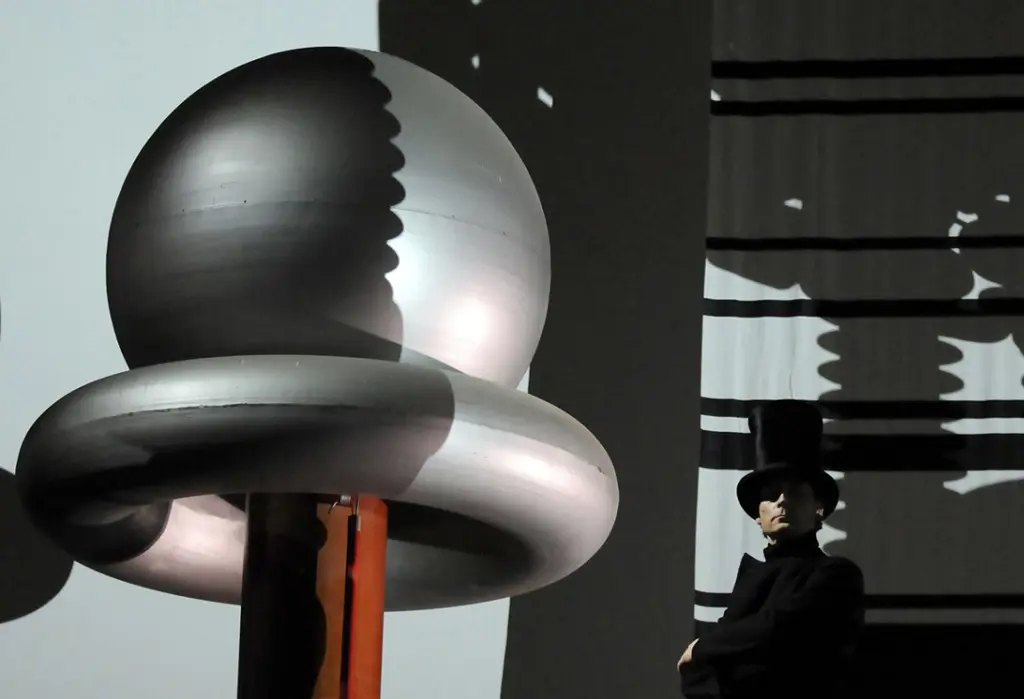
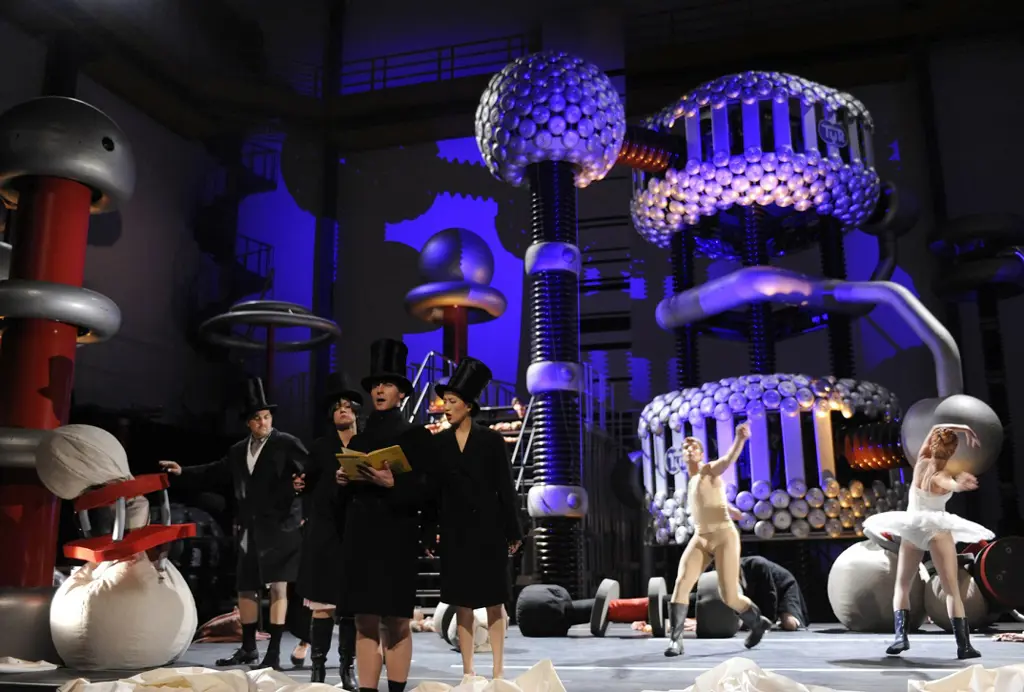
Ein Projekt der Sächsischen Staatsoper Dresden (Intendant Prof. Gerd Uecker) in der Hochspannungshalle der Technischen Universität Dresden, am 23. Oktober 2009, 20.00 Uhr
UT-OP.er
Or the Eternal Now
loosely after «Utopia» by Thomas More from 1516
Music theatre by Alexander Strauch (music) and Martina Veh (text)
A project of the Sächsische Staatsoper Dresden (General Director Prof. Gerd Uecker) in the Hochspannungshalle of the Technische Universität Dresden, on 23 October 2009, 8:00 pm
Besetzung
Musik, Konzept: Alexander Strauch
Idee, Konzept und Inszenierung: Martina Veh
Raum und Kostüm, Konzept: Kristina Siegel
Musikalische Leitung: Gelsomino Rocco
Raum und Kostüm: Kristina Siegel
Dramaturgie: Stefan Ulrich
Licht: Steffen Adermann
Video: Knut Geng
Fotos: Matthias Kreuziger
Mit Christopher Robson (Counter-Tenor)
Und: Ralf Arndt (Tanz), Lin Lin Fan (Koloratursopran), Clemens Heidrich (Bass), Gerald Hupach (Tenor), Sofi Lorentzen (Alt), Romy Petrick (Koloratursopran), Steffen Rössler (Bass), Carola Schwab (Tanz),
Sprecher: Johannes Beckmann
Cast
Music, concept: Alexander Strauch
Idea, concept and direction: Martina Veh
Space and costumes, concept: Kristina Siegel
Musical direction: Gelsomino Rocco
Space and costumes: Kristina Siegel
Dramaturgy: Stefan Ulrich
Lighting: Steffen Adermann
Video: Knut Geng
Photos: Matthias Kreuziger
With Christopher Robson (countertenor)
And: Ralf Arndt (dance), Lin Lin Fan (coloratura soprano), Clemens Heidrich (bass), Gerald Hupach (tenor), Sofi Lorentzen (alto), Romy Petrick (coloratura soprano), Steffen Rössler (bass), Carola Schwab (dance),
Speaker: Johannes Beckmann
MEINE SICHTMY POINT OF VIEW
Premiere (world premiere) on 23 October 2009
Further performances: 24, 25, 28 October and final performance on 1 November 2009, each at 8.00 pm
About the piece:
An image-rich journey of time, of place, of chance, of the confrontation between reality and desire, of joy and intoxication, of catastrophe, of the crowd towards the individual, of the individual into his inner world, a journey in search of utopia.
Ou-topos, the non-place. Utopia, a recently discovered island somewhere in the New World. Thomas More's little book appeared in December 1516 – despite its humorous distance, a radical attempt to reflect on the ideal of the equality of human beings and on power structures in a time of change.
The protagonist, an explorer by the name of Hythloday, which means something like “the paddler in nonsense”, has gone missing. We set out to look for him.
Thomas More's “Utopia” is a kind of kaleidoscope through which we look, in fragments, at our own time, setting ourselves in relation to it and depicting it fragmentarily. Thomas More found himself in a time of transition, the departure into the modern age. Upheaval and change are the themes of our project. The loss of the “great utopias” has resulted in a multifaceted mass of individuals, who open up new impulses and forces for change. The change into which the person of today is thrown, the search in “nowhere” for a place to linger, finding oneself again in the cafés of the metropolises, a glass of lemonade, a memory of paradise.
If for More utopia is still a place that is only theoretically conceivable as a fantasy that cannot be realised, then – looking at today's social, political and societal circumstances – one can begin to consider whether this utopia of 500 years ago has not, at least in part, become reality after all. A utopia of the past would accordingly be lived today.
Ou tópos, the non-place; in it is translated what we people of today can sense: a kind of placelessness that shapes our society. Without belonging there is no utopia, only individual longings and wishes: one's own happiness, financial security and emotional contentment, etc. A social utopia can only develop if a certain sense of belonging is defined. Its definition, however, has shifted: today it includes notions such as the place of work, the place of living, the linguistic area, the ideological, the character-related and the emotional place. Looking at the present, it is not easy in the globalised world to find an existing utopia that is valid for the community of human beings. Yet there is at least one: human rights! A utopia?
And after Utopia? Perhaps something quite different is coming? Perhaps no more Utopia, one shaped by a humanist worldview? Perhaps another Utopia will be written, one that will be realised in another 500 or 50 years?
The crisis? Certainly not a financial one, rather a spiritual one.
Synopsis:
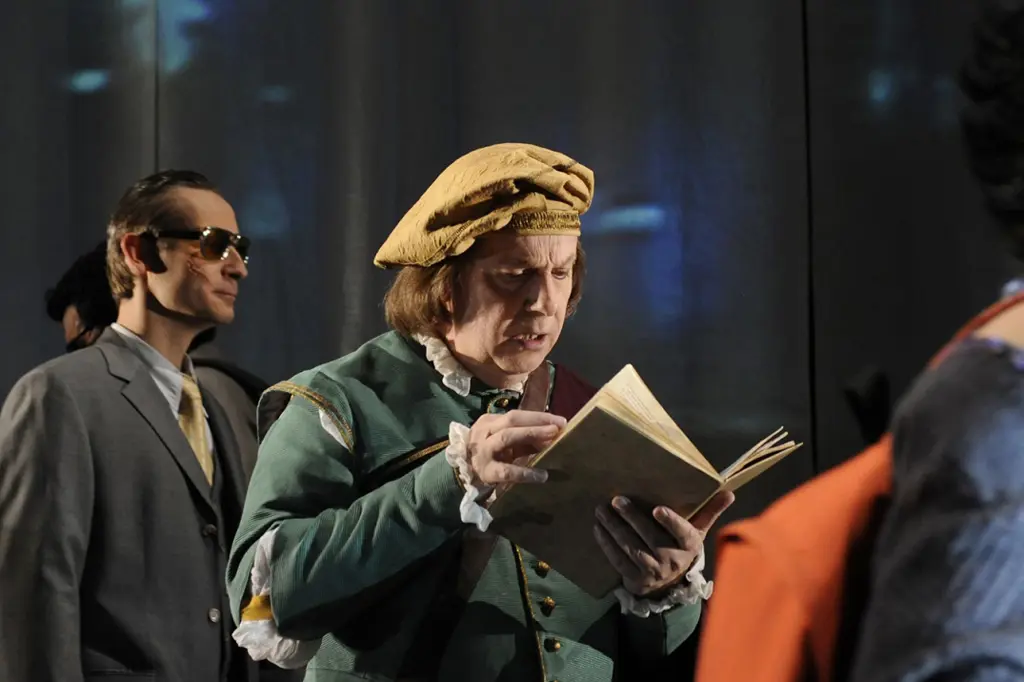
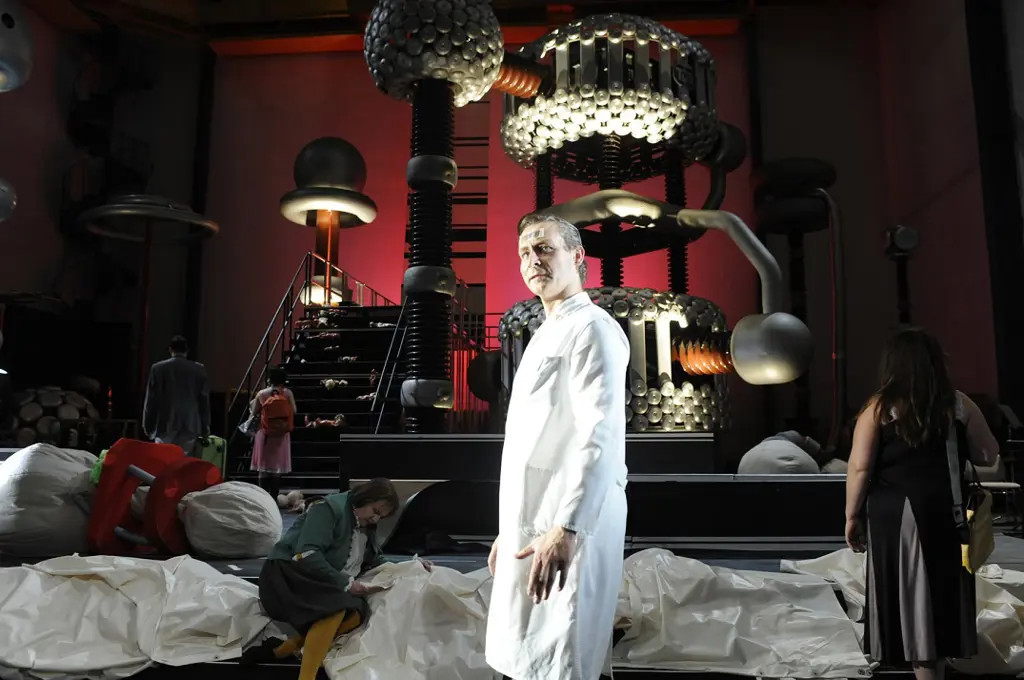
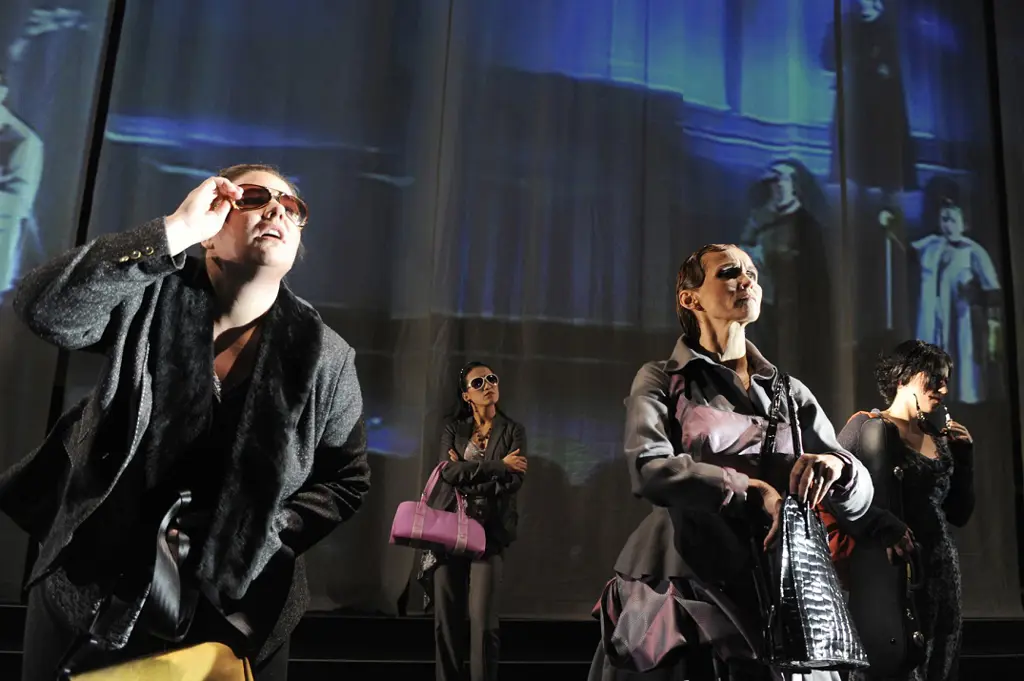
The protagonist receives a commission from Thomas More. He is to find the man whose factual account of a distant place known to him, ‹Utopia›, More wrote down in his book of the same name, in order to verify its truthfulness before the work is published. The envoy sets out on his search. In doing so he ends up in a time machine, at a non-place of the present, a transit space. With the help of the book enclosed with the commission, he tries to reassure himself that he is on the right track. Strange things befall the seeker, and he meets people of today. Sensing that he has landed directly in Utopia, a world that is by no means only pleasant, he despairs and collapses.
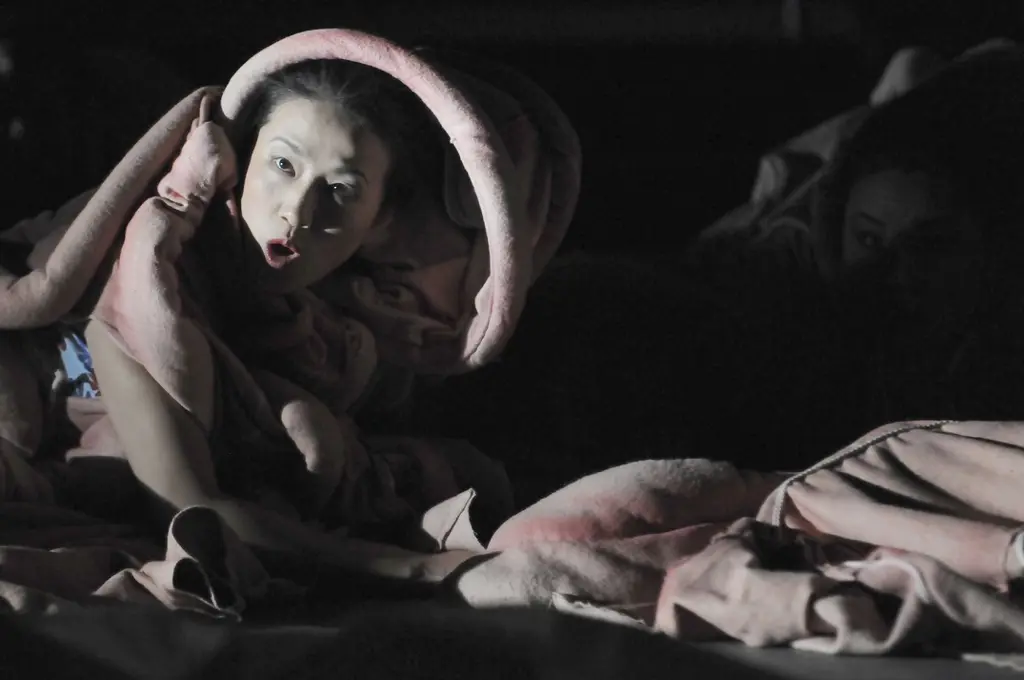
In the second part of the piece we look into the protagonist's inner world. His innermost images and fantasies, realities and fears intermingle. An inside view of a world of today. People move differently. Time can no longer be sorted.
In the end the envoy finds out that he himself is the one being sought, Raphael Hythloday, the “paddler in nonsense”, and that he himself has arrived in Utopia, an eternal now, and that it is up to him to rewrite the book, write it anew or destroy it. Perhaps something new will come. He hands in the commission and passes it on to the audience.
Commentary:
On paddling in the non-place
With “Utopia”, the portrayal of an “ideal” society, Thomas More set the weighty benchmark for the genre of the social utopia; the work is regarded as the first political novel of the modern age, which on the one hand criticises English society at the beginning of the 16th century in its depravity, criminality and political disorder. On the other hand, “Utopia” depicts the intact social order of an island called Utopia, which offers its inhabitants a life in prosperity, justice and peace – a utopia of life. Yet Utopia means non-place, nowhere-land. Its main town, Amaurotum (City of Mist), lies on the “river without water”, and the name of the traveller who describes this world, Hythloday, can be translated as “babbler” or also as “paddler in nonsense”; beside these linguistic subtleties of a humorous handling of designations and namings, it is evident that More here takes the path far away from the reality of life towards a super-reality. He draws a place that exists only as a thought and thus proves to be seemingly unrealisable.
On the erasure of half a millennium
This book became the trigger for the project “UT-OP.er”, in which thematic fields are negotiated that, as if sucked out of More's “Utopia”, document their timeless topicality. As if the leap in time of nearly 500 years did not exist, Martina Veh recognises parallels between More's text and the present. A chance constellation in a street café gave the writer of the piece, Veh, the impetus: “The explosiveness of Thomas More's tone captivated me completely, all the more so as a daily newspaper happened to be lying on my breakfast table at the same time. ‘Utopia’: the fear of censorship that resonates throughout, the nevertheless radical attempt to think critically about the power and economic structures of his time, to put the expansion policy of the then emerging Europe in a very critical light, above all also by means of simple everyday examples… All this in connection with the present-day newspaper, whose author could just as well have been the author of ‘Utopia’, kept me on the edge of my seat. Parallels upon parallels leapt out at me and inspired me to a project…”
Living in Utop?
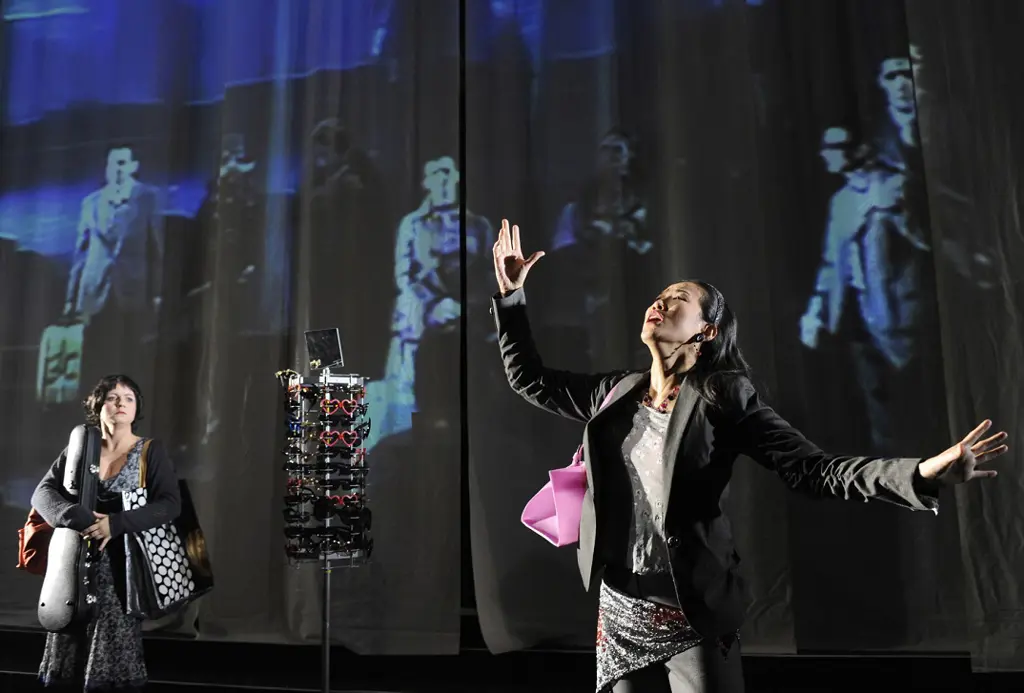
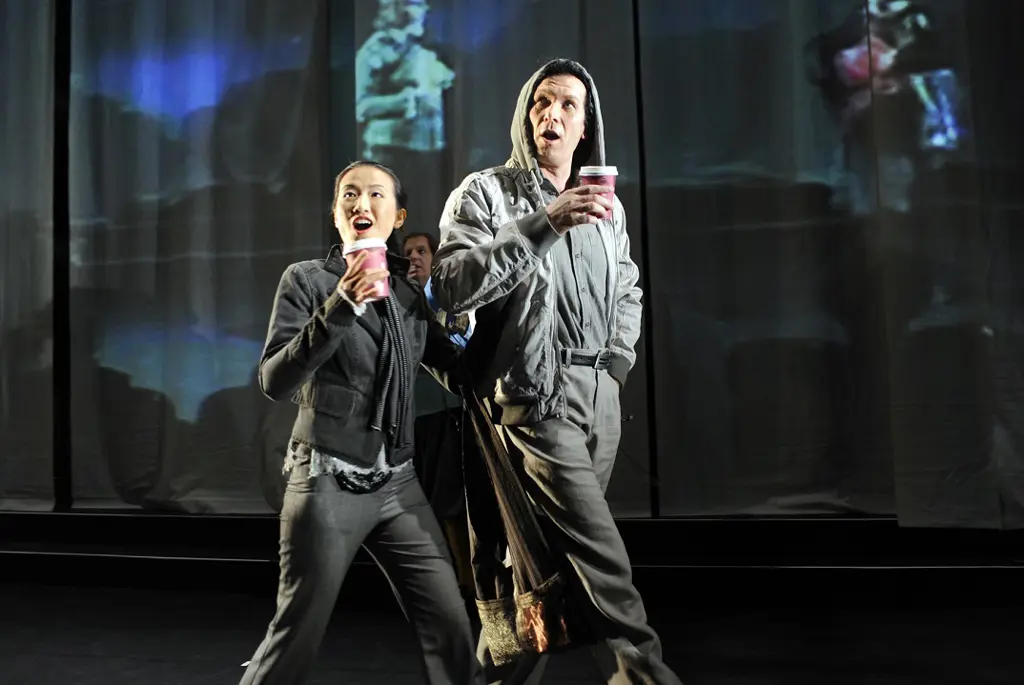
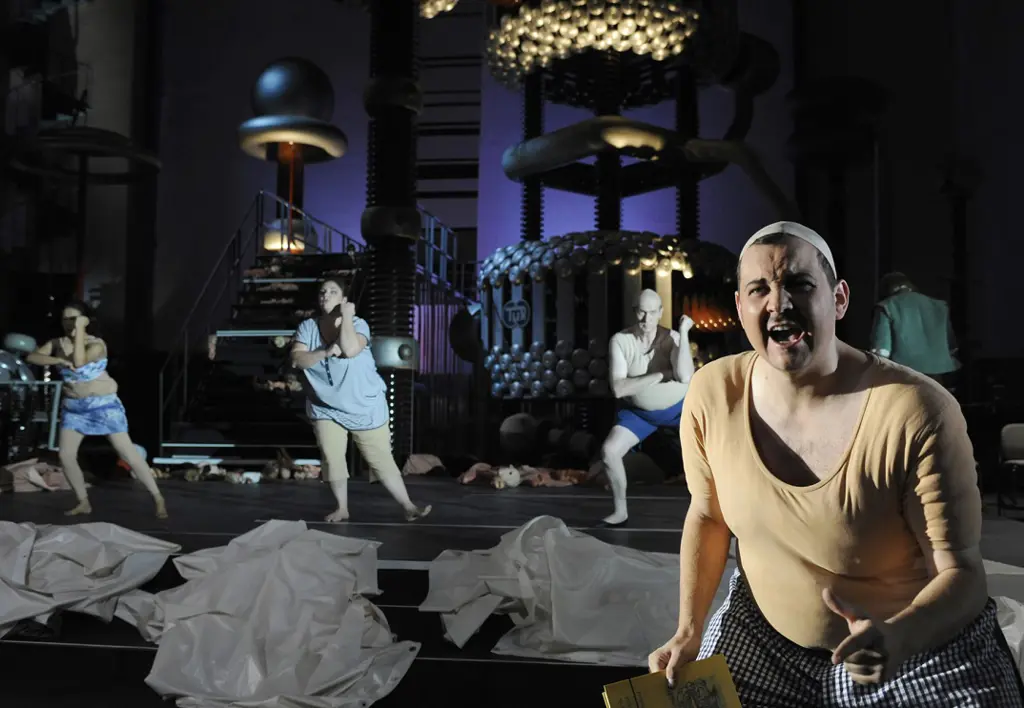
How are people faring who live in the now, in this Utopia? These are our characters… That is us! These are the ones who hint at psychological traps, at satiety and its shadows, … the “no longer being able/wanting to do anything”, no longer being able to go and vote, because one has the choice to live “everywhere and nowhere”… One problem of our society is also the placelessness and hence a responsibility that is hard to assign. Through the placelessness, I think, a utopia that relates to a community diffuses into the wishes and longings of single individuals. A social utopia can probably only be developed if there is a certain sense of belonging to a group or social structure, which until a few decades ago was always tied to a place.
Premiere (Uraufführung) am 23. Oktober 2009
Weitere Vorstellungen: 24., 25., 28. Oktober und letzte Vorstellung am 1. November 2009 um jeweils 20.00 Uhr
Zum Stück:
Eine bilderreiche Reise der Zeit, des Ortes, des Zufalls, der Auseinandersetzung zwischen Realität und Wunsch, der Freude und des Rausches, der Katastrophe, der Menge zum Individuum, des Individuums in seine Innenwelt, eine Reise auf der Suche nach Utopie.
Ou-topos, der Nicht-Ort. Utopia, eine neuerdings entdeckte Insel irgendwo in der Neuen Welt. Thomas Morus’ kleines Buch erschien im Dezember 1516 – trotz humorvoller Distanz ein radikaler Versuch, über das Ideal der Gleichheit der Menschen und die Machtstrukturen in der Zeit des Wandels nachzudenken.
Der Protagonist, ein Entdecker namens Hythloday, was soviel heißt wie «der Paddler im Unsinn», ist abhanden gekommen. Wir begeben uns auf die Suche.
„Utopia“ von Thomas Morus ist eine Art Kalaidoskop, durch das wir bruchstückhaft in unsere heutige Zeit blicken, dabei uns zu ihr ins Verhältnis setzen und fragmentarisch abbilden. Thomas Morus hat sich in einer Zeit des Übergangs befunden, dem Aufbruch in die Neuzeit. Umbruch und Wandel sind die Themen unseres Projekts. Der Verlust der „großen Utopien“ hat eine vielgestaltige Masse von Individuen zur Folge, die neue Impulse und Kräfte für Veränderungen eröffnen. Der Wandel, in den der Mensch von heute geworfen ist, die Suche im „Nirgendwo“ nach einem Ort des Verweilens, sich wiederfinden in den Cafés der Metropolen, einem Glas Limonade, einer Erinnerung an das Paradies.
Ist für Morus Utopia noch ein Ort, der als nicht zu verwirklichende Phantasie nur theoretisch denkbar ist, so lässt sich – blickt man auf die heutigen gesellschaftlichen, politischen und sozialen Umstände- andenken, ob diese Utopie von vor 500 Jahren nicht doch zumindest in Teilen zur Realität geworden ist. Ein Utopia der Vergangenheit würde demnach heute gelebt.
Ou tópos, der Nicht-Ort; darin setzt sich um, was wir Menschen von heute spüren können: Eine Art Ortlosigkeit, die unsere Gesellschaft prägt. Ohne Zugehörigkeit keine Utopie, sondern nur noch individuelle Sehnsüchte und Wünsche: Das eigene Glück, die finanzielle Sicherheit und emotionale Zufriedenheit etc. Eine soziale Utopie kann sich nur entwickeln, wenn ein gewisses Zugehörigkeitsgefühl definiert ist. Deren Definition hat sich aber verschoben: dazu zählen heute Begriffe wie der Arbeitsort, der Lebensort, der Sprachraum, der ideelle, charakterliche und der emotionale Ort. Betrachtet man das Heute, so ist es nicht leicht, in der globalisierten Welt, eine bestehende, für die Gemeinschaft der Menschen gültige Utopie zu finden. Doch, zumindest eine gibt es: Die Menschenrechte! Eine Utopie?
Und nach Utopia? Vielleicht kommt etwas ganz anderes? Vielleicht kein Utopia mehr, das von einem humanistischen Weltbild geprägt ist? Vielleicht wird ein anderes Utopia geschrieben, das sich umsetzt in weiteren 500 oder 50 Jahren?
Die Krise? Gewiss keine finanzielle, eher eine geistige.
Inhalt:
Der Protagonist bekommt einen Auftrag von Thomas Morus. Er soll jenen Menschen auffinden, dessen Tatsachenbericht über einen ihm bekannten fernen Ort ‹Utopia› Morus in seinem gleichlautenden Buch niederschrieb, um vor Herausgabe des Werkes dessen Wahrheitsgehalt zu überprüfen. Der Beauftragte macht sich auf die Suche. Er gerät dabei in eine Zeitmaschine, an einen Unort der Gegenwart, einen Transit-Raum. Mit Hilfe des Buches, das dem Auftrag beiliegt, versucht er sich zu versichern, dass er auf der richtigen Fährte ist. Dem Suchenden widerfahren seltsame Dinge, und er begegnet heutigen Menschen. Ahnend, dass er direkt in Utopia gelandet ist, keiner nur angenehmen Welt, verzweifelt er und bricht zusammen.
Im zweiten Teil des Stückes blicken wir in die Innenwelt des Protagonisten. Es vermischen sich seine innersten Bilder und Phantasien, Realitäten und Ängste. Eine Innensicht einer heutigen Welt. Die Menschen bewegen sich anders. Die Zeit ist nicht mehr sortierbar.
Der Beauftragte findet am Ende heraus, dass er selbst der Gesuchte ist, Raphael Hythloday, der „Paddler im Unsinn“ und dass er selbst in Utopia angelangt ist, einem ewigen Jetzt und dass es an ihm liegt, das Buch umzuschreiben, neu zu schreiben oder zu vernichten. Vielleicht kommt etwas Neues. Er gibt den Auftrag ab und an das Publikum weiter.
Kommentar:
Über das Paddeln im Nicht-Ort
Mit «Utopia», der Schilderung einer «idealen» Gesellschaft, setzte Thomas Morus die (ge)wichtige Marke zum Genre der Sozialutopie; Das Werk gilt als erster Staatsroman der Neuzeit, der einerseits die englische Gesellschaft zu Beginn des 16. Jahrhunderts in ihrer Verderbtheit, Kriminalität und politischer Unordnung kritisiert. Andererseits schildert «Utopia» die intakte Sozialordnung einer Insel namens Utopia, die ihren Bewohnern ein Leben in Wohlstand, Gerechtigkeit Frieden bietet – eine Lebens-Utopie. Doch Utopia heißt Nicht-Ort, Nirgendwo-Land. Ihr Hauptort, Amaurotum (Nebelstadt) liegt am «Fluss ohne Wasser», und der Name des Reisenden, der diese Welt beschreibt, Hythloday, lässt sich mit «Schwätzer» oder auch mit «Paddler im Unsinn» übersetzen; neben diesen sprachlichen Finessen humorvollen Umgangs mit Bezeichnungen und Benennungen ist offensichtlich, dass Morus hier den Weg weit weg von einer Lebens-Realität hin zu einer Überwirklichkeit geht. Er zeichnet einen Ort, der nur als Gedanke existiert und sich damit als scheinbar unrealisierbar erweist.
Von der Streichung eines halben Jahrtausends
Dieses Buch wurde zum Auslöser für das Projekt «UT-OP.er», worin Themenkreise verhandelt werden, die, wie aus Morus’ «Utopia» herausgesogen, ihre zeitlose Aktualität dokumentieren. Als würde der Zeitsprung von bald 500 Jahren nicht existieren, erkennt Martina Veh Parallelen zwischen Morus’ Schrift und dem Heute. Eine zufällige Konstellation im Straßencafé gab der Stückschreiberin Veh den Anstoß: «Die Brisanz der Tonlage von Thomas Morus schlugen mich vollkommen in ihren Bann, umso mehr, also dass parallel eine Tageszeitung auf meinem Frühstückstisch lag. ‹Utopia›: Die durchklingende Angst vor der Zensur, der dennoch radikale Versuch, kritisch über die Macht- und Wirtschaftsstrukturen seiner Zeit nachzudenken, die Expansionspolitik des damals werdenden Europas in ein sehr kritisches Licht zu setzen vor allem auch anhand der einfachen alltäglichen Beispiele… Dies alles in Verbindung mit der gegenwärtigen Tageszeitung, deren Autor ebenso der Verfasser der ‹Utopia› hätte sein können, hielt mich in Atem. Parallelen über Parallelen sprangen mir ins Auge und regten mich an zu einem Projekt…»
Leben im Utop?
Wie geht es Menschen, die im Jetzt, in diesem Utopia leben? Das sind unsere Figuren… Das sind wir! Das sind die Psychischen Fallen andeuten, die Sattheit und ihre Schatten, …das „nichts mehr tun können/wollen“, nicht mehr zur Wahl gehen können, weil man die Wahl hat „überall und nirgends“ zu leben… Ein Problem unserer Gesellschaft ist ja auch die Ort-losigkeit und somit eine schwer zuteilbare Verantwortlichkeit. Durch die Ort-losigkeit diffundiert, meine ich, eine Utopie, die sich auf eine Gemeinschaft bezieht, zu Wünschen und Sehnsüchten von einzelnen Individuen. Eine soziale Utopie kann man wahrscheinlich nur entwickeln, wenn ein gewisses Zugehörigkeitsgefühl vorhanden ist zu einer Gruppe oder sozialen Struktur, die bis vor wenigen Jahrzehnten immer örtlich gebunden war.
GALERIEGALLERY